


Don’t you find it strange that in a world where AI can summarise meetings, translate conversations in real time and identify action items automatically, there's one phrase that refuses to disappear from hybrid work: “Can you hear me?".
Some people blame Microsoft Teams or Zoom when that happens. In reality, the meeting platform is rarely the issue. More often, the room simply wasn’t designed for hybrid collaboration. The good news is that modern AV technology has changed dramatically over the past few years. Today’s meeting spaces actively manage sound, making conversations clearer and more natural for everyone, whether they’re sitting in the room or joining remotely.
The Root of the Problem
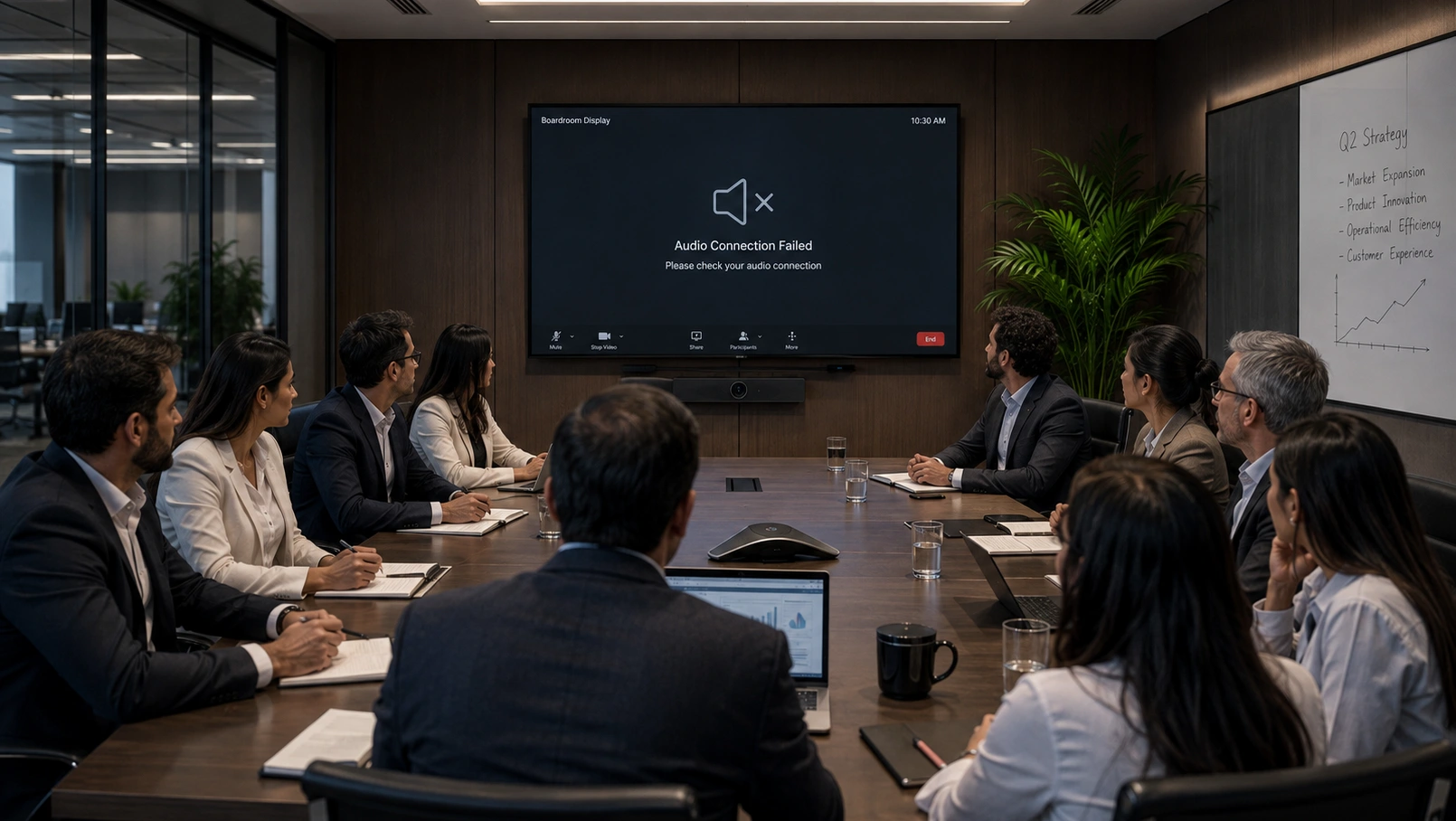
Usually, poor meeting audio is the result of several small issues working together.
Think about a typical conference room. Someone leans back in their chair while speaking. Another person walks to the display to present. The air conditioning starts up, laptops click away and conversations drift in from outside the room. None of these distractions are significant on their own, but together they make it harder for remote participants to follow what’s being said.
That’s why two people can leave the same meeting with completely different experiences. Those sitting around the table may feel the discussion went smoothly, while remote attendees spent half the meeting asking people to repeat themselves.
Hybrid work has changed what a meeting room needs to do. Everyone, regardless of where they’re joining from, needs to feel like they’re part of the same conversation.
What Modern Meeting Rooms Do Differently
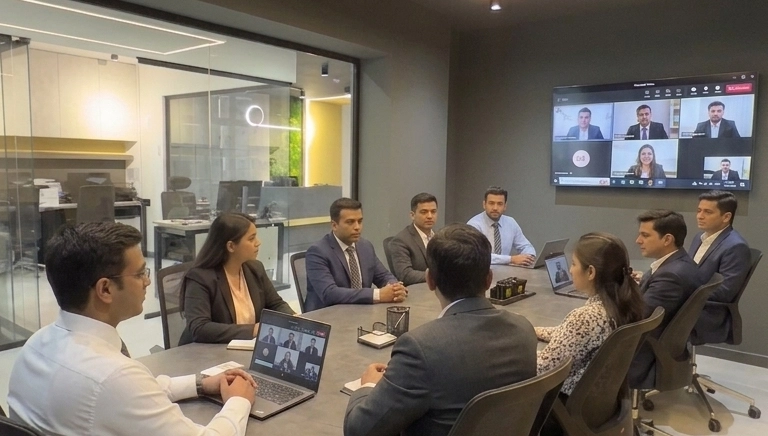
Ask someone what makes a good meeting room and they’ll probably mention the display first. In practice, it’s the audio system doing most of the heavy lifting.
Modern meeting rooms involve several technologies work together to make speech easier to capture, process and reproduce. Most people never notice them because they’re designed to stay in the background.
Take beamforming microphones, for example. Rather than listening to the entire room equally, they focus on the person who’s speaking. Someone presenting from the front of the room, another joining the discussion from the corner of the table and a colleague standing by the whiteboard can all be picked up clearly without passing around a handheld microphone.
Capturing speech is only the first step. Once the audio enters the system, digital signal processing (DSP) begins cleaning it up. Echo is reduced, voices are balanced and unwanted frequencies are filtered before the sound reaches remote participants. AI-based noise suppression adds another layer by recognising sounds that don’t belong in the conversation, such as keyboard typing, air conditioning or a door closing, and reducing their impact without affecting speech.
Why Room Design Still Matters
The smartest microphone can’t overcome a poorly designed room.
Large glass walls, polished tables and exposed ceilings may suit a modern office aesthetic, but they also reflect sound. The result is speech that feels less defined, especially during discussions where several people contribute in quick succession.
That’s why professional AV projects begin with the room rather than the equipment. Microphones are positioned around how people naturally interact, speakers are placed to provide even coverage and acoustic treatments are introduced where they’re needed most.
Even small changes, such as relocating a ceiling microphone or adding acoustic panels to one wall, can have a noticeable effect on speech clarity.
It’s also why replacing a webcam or adding another microphone rarely fixes a room that was never planned for hybrid meetings in the first place.
Being Heard Is About More Than Better Audio
One idea has become increasingly important as hybrid work has matured: meeting equity. It’s a simple concept. Everyone should be able to participate in a meeting on equal terms, whether they’re in the room or joining from somewhere else.
Poor audio undermines that almost immediately.
When remote participants miss part of the discussion, they contribute less. Side conversations around the table go unheard, quick comments are lost and people become reluctant to interrupt for clarification. Over time, they stop engaging as naturally as colleagues sitting in the room.
Good audio changes that dynamic. Conversations become easier to follow, people don’t have to repeat themselves as often and remote attendees feel confident jumping into the discussion because they know they’ll be heard clearly.
Meeting equity starts with making every voice equally clear.
Why Professional AV Design Makes the Difference
Choosing quality hardware is only part of the process. How that equipment is designed into the room has just as much influence on the final result.
Two meeting rooms can use the same microphones, speakers and conferencing platform yet deliver completely different experiences. The difference often comes down to planning. Microphone coverage, speaker placement, room acoustics and DSP tuning all need to work together.
We’ve seen meeting rooms fitted with premium cameras and microphones that still frustrate users because the technology was never designed to operate as a single system. Integration solves that problem by treating the room as one environment instead of a collection of individual devices.
Conclusion
If “Can you hear me?” is still one of the most common phrases in your meetings, the problem is unlikely to be the conferencing platform alone.
Meeting rooms have changed. The technology inside them needs to change as well.
With intelligent microphones, AI-assisted audio processing, thoughtful acoustic design and professional AV integration, organisations can create spaces where conversations happen naturally, decisions are made more quickly and every participant feels part of the discussion, wherever they’re joining from.
Creating a meeting room that works consistently requires understanding how people use the space, how sound behaves within it and how collaboration platforms fit into the wider workplace. If you’re looking to upgrade your meeting rooms or just want to know more about today’s hybrid ways of working, from intelligent audio systems and Microsoft Teams Rooms to Zoom Rooms, please feel free to get in touch with us.
FAQ’s
People can usually cope with occasional video glitches, but missing parts of a conversation quickly breaks concentration. Clear speech has a much bigger impact on meeting productivity than sharper video.
A beamforming microphone focuses on the person speaking instead of capturing sound equally from every direction. This improves voice clarity while reducing unwanted background noise.
AI noise suppression is highly effective at reducing sounds such as keyboard typing, HVAC noise and office chatter. However, it works best as part of a professionally designed AV system rather than as a replacement for good microphone placement and room acoustics.
Even premium microphones struggle in rooms with excessive echo or sound reflections. Acoustic treatments and thoughtful room design help speech remain clear before the audio is processed.
Yes. Many organisations improve meeting quality by upgrading microphones, adding DSP, improving acoustics and integrating modern conferencing solutions without rebuilding the room from scratch.