


This blog explores how workplace collaboration is evolving as businesses adopt hybrid work and digital systems. It looks at common communication challenges inside modern organisations and shares practical ways companies can improve productivity, coordination and employee experience through better collaboration tools and workflows.
That shift has changed how organisations approach enterprise collaboration.
Organisations investing in stronger digital workplace solutions are usually trying to solve something very practical: how do people work together efficiently without wasting time, repeating conversations, or getting buried under disconnected systems?
That question sits at the centre of modern workplace productivity.
The evolving role of digital workplace solutions
Most offices already have collaboration tools. The problem is that many of them don’t work together properly and are simply not that effective.
Digital workplace solutions allow people to find information quickly, communicate without delays and continue work without constant follow-ups from colleagues. This becomes even more important in hybrid workplace collaboration environments where employees are not physically sitting together every day.
Office spaces are changing too.
Meeting rooms are now expected to connect instantly without someone spending ten minutes troubleshooting cables, audio, or screen sharing before the discussion. Solutions like environment control and automation systems are increasingly helping organisations simplify room controls, conferencing, lighting and AV management into one smoother experience.
Why collaboration quality affects business performance
A lot of delays inside organisations come from small communication gaps that keep repeating throughout the day, such as a person is waiting for a response before they can continue. Someone shares an important update, but it gets buried under dozens of other messages. Two teams end up working on similar things because they were not aware of each other’s progress.
None of these situations are serious on their own. But when they happen across an organisation every day, they start affecting how work moves.
This is where collaboration systems become useful. Collaboration systems are useful because they reduce the small gaps that appear when work is spread across different teams. Instead of updates sitting in separate inboxes, chat threads or individual folders, information has a better chance of reaching the people who need it.
This becomes especially valuable when a project involves multiple departments. The people handling customers, operations, sales or product decisions can stay connected to the same conversation rather than working with incomplete information.
For hybrid teams, this matters even more. Employees no longer have the advantage of simply walking over to someone’s desk to clarify something. The systems around them have to make those everyday exchanges easier.
When people work from different locations, they lose many of the quick conversations that naturally happen in an office. The digital tools they use have to make up for that gap.
The aim is not to add more platforms or create more meetings. It is to make everyday coordination simpler so people can focus on the work itself.
The collaboration problems many companies still face
One mistake organisations often make is assuming that adding more collaboration tools automatically improves workplace productivity.
Usually, the opposite happens.
Employees end up checking five different places for the same update.
Over time, that creates a strange kind of fatigue. People stay busy all day but still feel like important work is moving slowly.
They need to reduce confusion (instead of simply introducing technology) rather than create another layer of it.
Proven Strategies to Improve Team Productivity and Engagement
1. Build a digital-first workplace

Modern workplaces depend on many systems working together, from communication platforms to meeting environments and shared digital resources.
The challenge is when employees have to jump between disconnected tools just to complete simple tasks.
A connected digital workplace brings these experiences closer together, making it easier for teams to access information, communicate and continue work without unnecessary delays.
As hybrid work becomes more common, organisations are also linking their physical spaces with digital collaboration systems so employees can work effectively from different locations.
2. Create meeting spaces that work instantly
A meeting room should allow people to start discussions right away, without spending time preparing the room.
But that rarely happens. In most offices, it is common to face small issues before meetings begin. The display does not connect, the presentation source is unclear or someone has to search for the right cable or adapter.
Modern AV environments remove these everyday interruptions through wireless presentation, integrated controls and simpler room setups.
The technology needs to work quietly in the background, so teams can focus on the discussion instead of managing the equipment.
3. Make hybrid meetings work for everyone
A meeting room used to be designed mainly for the people sitting inside it. That is no longer enough.
When half the team is joining from another location, small things become important. Can they hear the discussion happening at the table? Can they see who is speaking? Can they follow what is being shared on screen?
This is where video collaboration systems make a difference. Cameras that frame speakers, microphones that pick up conversations clearly and displays that keep remote participants visible create a much closer experience for everyone involved.
The aim is not to make remote employees feel like they are watching a meeting. They should feel like they are part of it.
4. Turn meeting spaces into decision-making spaces
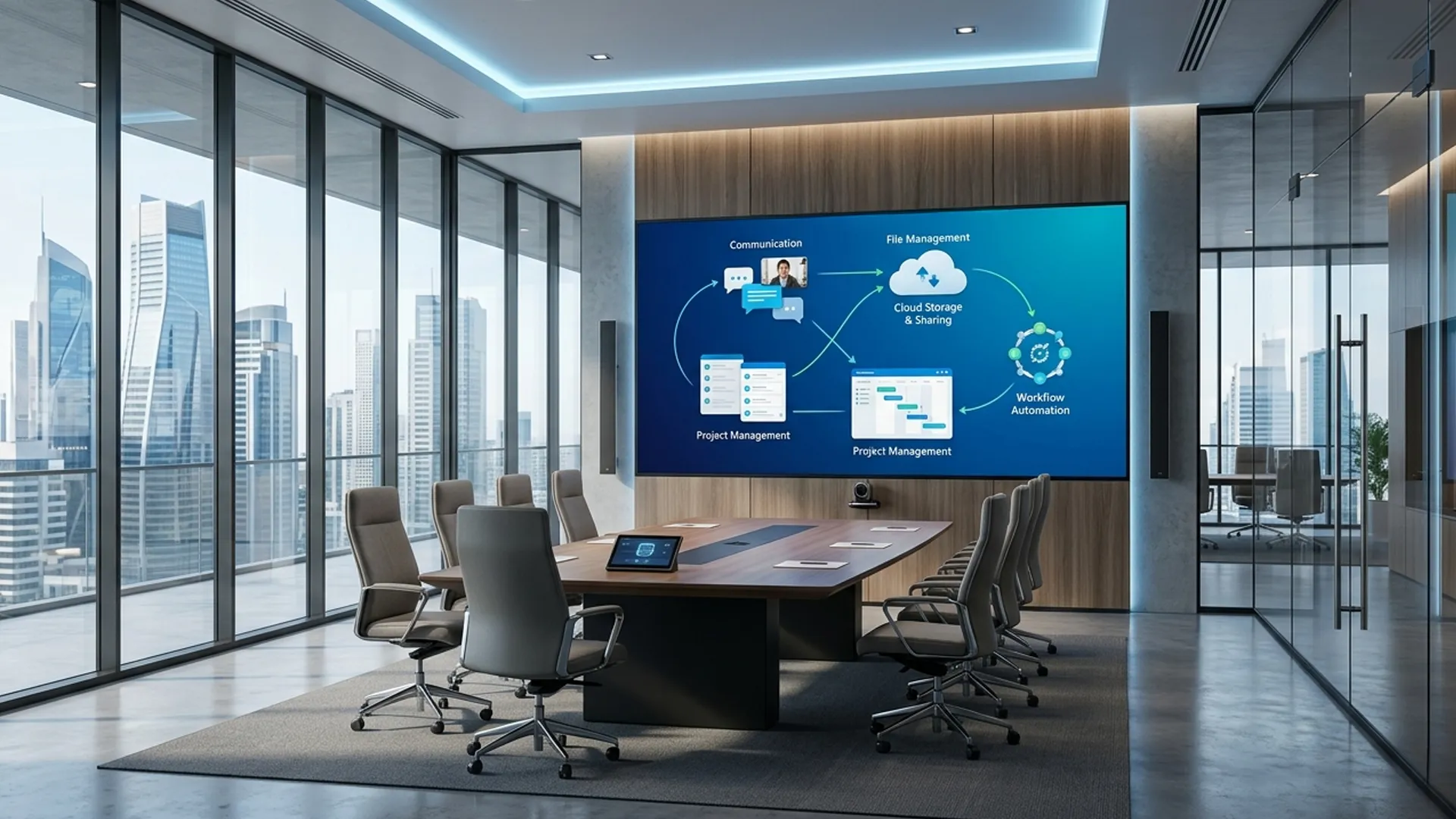
A lot of meetings exist because information is scattered: a presentation is in one place. The latest numbers are in another file. Someone has the feedback, but they are not in the room.
Modern collaboration spaces bring these pieces together. Large displays, interactive screens and content-sharing tools allow teams to review information, discuss ideas and make decisions while everyone is looking at the same thing.
This is especially useful for teams working on projects that involve multiple departments, where decisions often depend on input from different people.
5. Use technology that grows with the organisation
The needs of a workplace change over time. A small meeting room today may become a key collaboration space as teams grow. A training room may need to support presentations, workshops and hybrid sessions.
This is why scalable AV design matters.
Solutions built around flexible infrastructure such as network-based AV, centralised management and modular room setups allow organisations to adapt spaces instead of replacing them every few years.
Good workplace technology should not only solve today’s problems. It should continue working as the business changes.
Why employee experience is closely tied to collaboration
Employee experience is often discussed in terms of compensation, office culture, or flexibility.
But everyday work experience matters just as much.
When people spend large parts of the day trying to track approvals, search for updates, or coordinate basic tasks across departments, work starts feeling unnecessarily exhausting.
Not because the work itself is difficult.
Because the process around it becomes frustrating.
Better collaboration changes that feeling in smaller, practical ways.
People know where updates are shared. Meetings become shorter because information is easier to access beforehand. Employees don’t need to repeatedly ask the same questions just to move work forward.
In hybrid workplace collaboration environments especially, that clarity helps teams feel more connected even when they are working from different locations.
And in many organisations now, smoother collaboration is becoming closely linked with retention, engagement and overall workplace productivity.
Conclusion
Today, with hybrid work being a part of the office culture, enterprise workplace collaboration directly influences how efficiently organisations communicate, how quickly decisions happen and how employees experience work every day.
Organisations that can navigate this challenging phase by investing in stronger digital workplace solutions create environments where teams can collaborate more effectively.
If you are looking to improve workplace collaboration in your organisation, feel free to get in touch with our team of experts or check out our specialised AV solutions for enterprises today.
FAQ’s
Enterprise workplace collaboration is basically how teams stay connected while working across departments, offices, or remote setups. It includes the tools people use for meetings, file sharing, messaging and day-to-day coordination. The goal is simple: fewer communication gaps and less time wasted chasing updates.
A lot of productivity issues come from scattered communication and unclear processes rather than lack of effort. Teams usually work better when updates are easier to track, meetings are shorter and people know exactly where information lives. Good collaboration systems reduce unnecessary back-and-forth and help work move faster.
Digital workplace solutions combine communication, collaboration, meetings, file access and workflow management into one connected environment. Instead of employees switching between multiple disconnected platforms all day, these systems help everything feel more organised and easier to manage.
Hybrid work only functions properly when remote employees can participate as easily as people sitting in the office. If communication feels uneven, collaboration starts breaking down quickly. Good hybrid workplace systems help everyone stay aligned regardless of location or device.
There usually isn’t one perfect platform for every company. The best collaboration tools are the ones employees actually use consistently without friction. Most organisations rely on a mix of meeting platforms, communication apps, project tracking systems and cloud-based sharing tools that work smoothly together.