


AI is reshaping the all-important huddle room in 2026. Smart cameras track who's speaking, notes get taken automatically, and room scheduling just works without anyone fiddling with a panel. The result is small meeting spaces that are easier to walk into and actually get things done in. Thankfully, all that is changing…
AI-powered huddle rooms are becoming one of the biggest changes in workplace collaboration this year. Cameras can now recognise who is speaking. Microphones separate voices from background noise. Meeting summaries appear automatically after the discussion ends. Even the room itself can prepare for a meeting before the first person walks through the door.
This results in meetings that feel more natural for everyone, whether they are sitting around the table or joining from another office, another city or another country.
But why are we talking about huddle rooms?
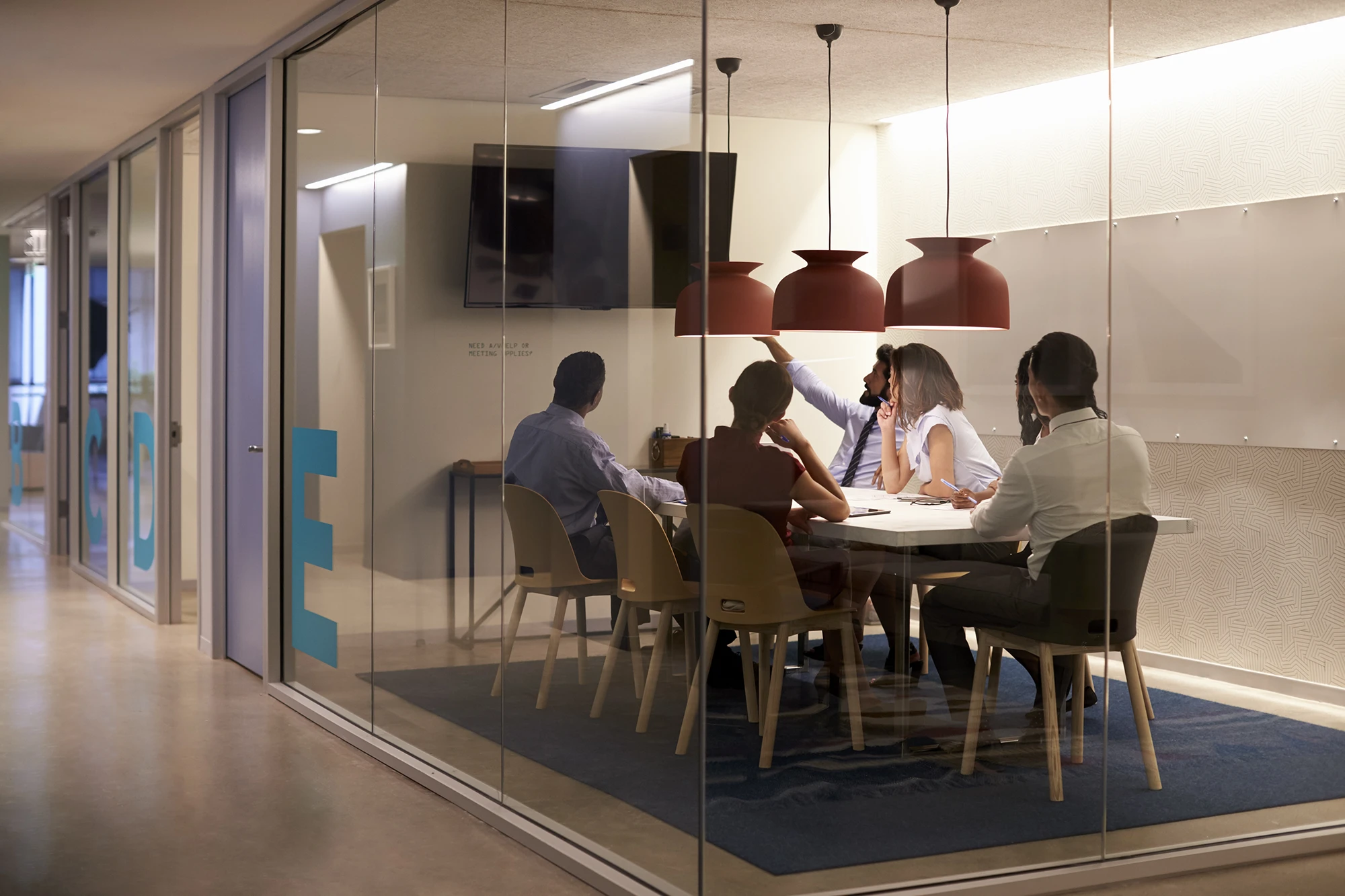
Large boardrooms often receive most of the attention when organisations plan new offices. In reality, much of the day’s work happens somewhere much smaller.
Project updates. Quick brainstorming sessions. Daily stand-ups. Many of these conversations take place inside compact meeting rooms designed for four to eight people.
Since hybrid work has become a permanent part of business, huddle rooms are being used for meetings that include colleagues working remotely, external consultants, customers or teams spread across multiple offices.
That changes what organisations expect from these rooms.
A few years ago, a simple display and conference phone might have been enough. Today, employees expect meetings to start quickly, the audio to be clear, content to be easy to share and remote participants to feel just as involved as everyone else.
What makes an AI-powered huddle room different?
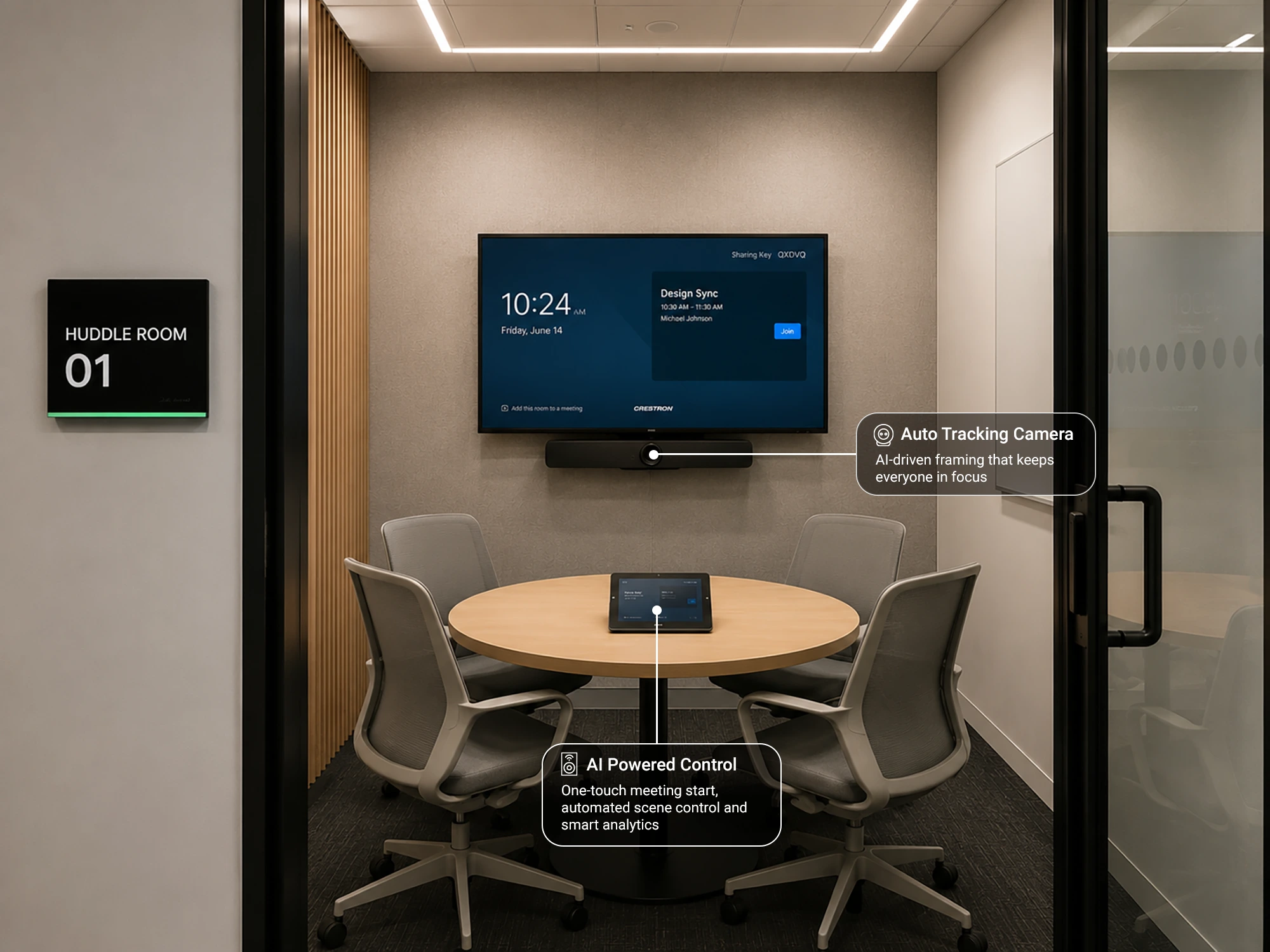
AI changes how cameras, microphones and displays in a meeting room work together.
Instead of waiting for someone to adjust the camera or select the right microphone, the room can respond automatically to what is happening inside it!
A camera switches between speakers effortlessly. Microphones focus on the person speaking while reducing distractions from nearby conversations or office noise. Displays wake up when a scheduled meeting begins. Wireless presentation systems connect without lengthy setup.
Many organisations are also combining these systems with Microsoft Teams, Zoom and other communications platforms so employees experience the same workflow regardless of which meeting room they use.
Some rooms even use occupancy sensors and AI room scheduling to understand how spaces are actually being used throughout the day. That information helps facilities teams make better decisions about room layouts, booking policies and future office planning.
- Small rooms are becoming much smarter
An AI-powered huddle room is designed to prepare for a meeting before anyone arrives.
As employees book rooms through workplace calendars, connected systems can begin getting the space ready automatically. Displays switch on, conferencing equipment wakes up and room settings adjust without anyone pressing a button.
Some workplaces are also using AI room scheduling alongside occupancy analytics to understand how meeting spaces are actually being used.
The data often reveals interesting patterns and insights that help workplace teams make practical decisions rather than relying on assumptions. Instead of building more meeting rooms, organisations can improve the ones employees already prefer using.
Over time, that leads to workplaces that are easier to manage and far better aligned with how people actually collaborate.
- Cameras have become active participants
Not long ago, most meeting rooms relied on a single wide-angle camera fixed above or below the display.
Remote participants often found themselves watching the backs of people’s heads or trying to work out who was speaking from across the room. If someone stood up to present, they frequently walked out of the frame altogether.
New AI camera systems behave very differently.
They identify the active speaker, adjust framing automatically and follow presenters as conversations move around the space. Some rooms even use multiple cameras that work together to create individual video feeds for different people at the table.
The result feels like actually being part of the discussion.
For remote employees, eye contact becomes more natural, facial expressions are easier to read and conversations flow with fewer interruptions because people no longer have to wonder who is talking.
AI is making conversations easier to hear
Audio is where most meetings actually fall apart. A keyboard clicking, the AC humming, two people talking over each other, you know it. Small stuff, yes, but it adds up over a day of back-to-back calls.
Newer huddle rooms handle many of these problems automatically.
AI-powered microphones can now differentiate between speech and background noise. That means unnecessary background noise is reduced, resulting in clearer conversations without anyone needing to adjust microphone settings.
Beamforming ceiling microphones and intelligent table arrays also make a noticeable difference. Rather than asking everyone to lean towards a single conference phone, the system identifies where people are sitting and focuses on whoever has the floor.
For remote participants, conversations sound more natural because voices remain consistent even as people shift in their seats or speak from different parts of the room.
Meetings no longer end when the call finishes
For years, somebody had to take notes during the meeting. Sometimes they missed important points because they were busy writing. Sometimes the notes never got shared. Action items disappeared into email threads and people spent the next meeting trying to remember what had been agreed the week before.
AI has changed that process.
Many meeting platforms can now generate live transcripts as conversations happen. So participants can now receive a summary of the meeting, which contains details of the discussions, decisions and follow-up actions.
It also helps anyone who’s joining late without disrupting the meeting. Employees who could not attend can understand what happened in a few minutes instead of watching an hour-long recording.
Meeting summarisation is also making collaboration more consistent across distributed teams. Whether someone joins from London, Mumbai or Singapore, everyone works from the same record of what was discussed.
The future of AI-powered huddle rooms
Today, the huddle room has become an intelligent workspace that adapts to the people using it.
As AI continues to mature, meeting rooms will become even more responsive. Cameras will understand conversations more naturally. Audio is likely to become even better at picking out voices while ignoring the everyday noise that creeps into meetings. At the same time, AI assistants will continue to handle things like notes, follow-ups and action items, and improve at that, leaving people free to concentrate on the conversation instead.
Conclusion
Huddle rooms are where most of the actual work happens and AI is making them a lot more efficient to use.
FAQ’s
An AI-powered huddle room is a small meeting space equipped with intelligent cameras, microphones and collaboration technology that can automate many everyday meeting tasks. Features such as speaker tracking, meeting summarisation and noise reduction help meetings run more smoothly without constant manual setup.
AI removes many of the small interruptions that affect meetings. It can improve audio quality, keep cameras focused on active speakers, generate meeting notes automatically and help remote participants stay involved throughout the discussion.
Meeting equity means creating an experience where remote and in-person participants can contribute equally. AI features such as intelligent camera framing, voice tracking and live captions help ensure everyone can follow the conversation and be heard clearly.
Many organisations are finding that employees now spend a large part of the working week collaborating in small meeting spaces. Upgrading these rooms with AI-powered AV systems helps meetings start faster, improves communication and creates a more consistent experience across hybrid teams.