



This blog explores how advancements in projector technology, AI-assisted calibration, and real-time rendering have made projection mapping more accessible across industries such as entertainment, retail, hospitality, museums, and live events. By blending technology, storytelling, and design, projection mapping is becoming a powerful tool for creating memorable, interactive experiences.
Projection mapping sits somewhere between technology, design, and storytelling. And over the last few years, it has moved far beyond entertainment. Brands, architects, museums, event companies, and even retailers are now using it to create experiences that feel more immersive and memorable than static displays ever could.
Projection mapping is basically the process of projecting visuals onto real physical surfaces in a way that makes them feel part of the object itself. A flat wall can suddenly appear to move. A building can look like it’s collapsing, opening up, or changing shape altogether.
How Projection Mapping Actually Works
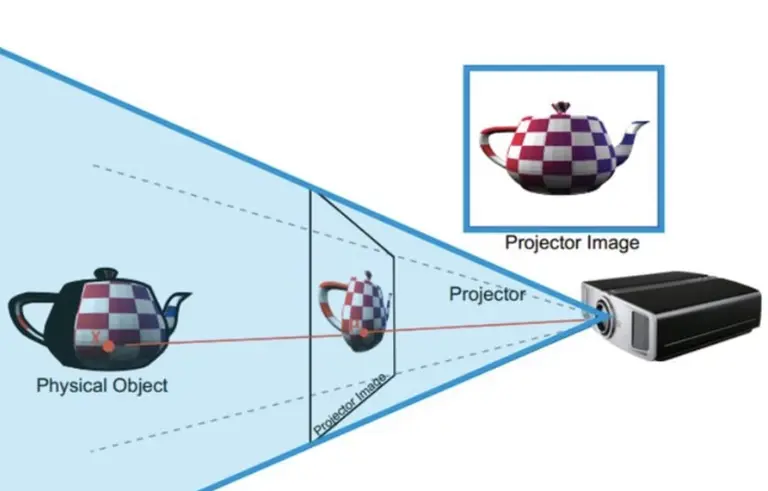
In projection mapping, the visuals are designed so carefully around a physical surface that the brain starts treating the projection as part of the object itself.
That process usually begins with scanning or digitally modelling the surface. Whether it’s a building facade, a sculpture, or an entire room, the software first needs to understand the exact dimensions and contours it’s working with.
From there, designers create visuals specifically for that geometry. A flat video usually won’t work. The content has to account for edges, depth, curves, windows, pillars, and anything else physically present on the surface.
The alignment stage is usually where the real work happens. If the projection is even slightly off, the illusion breaks immediately. A window frame stops lining up. Edges drift. Movement starts feeling unnatural.
That’s why calibration software matters so much. It helps the visuals sit properly on the surface instead of looking like they were simply projected onto it.
For large installations, multiple units are usually stitched together so the audience sees one continuous image rather than separate sections.
Why Projection Mapping Has Become Popular
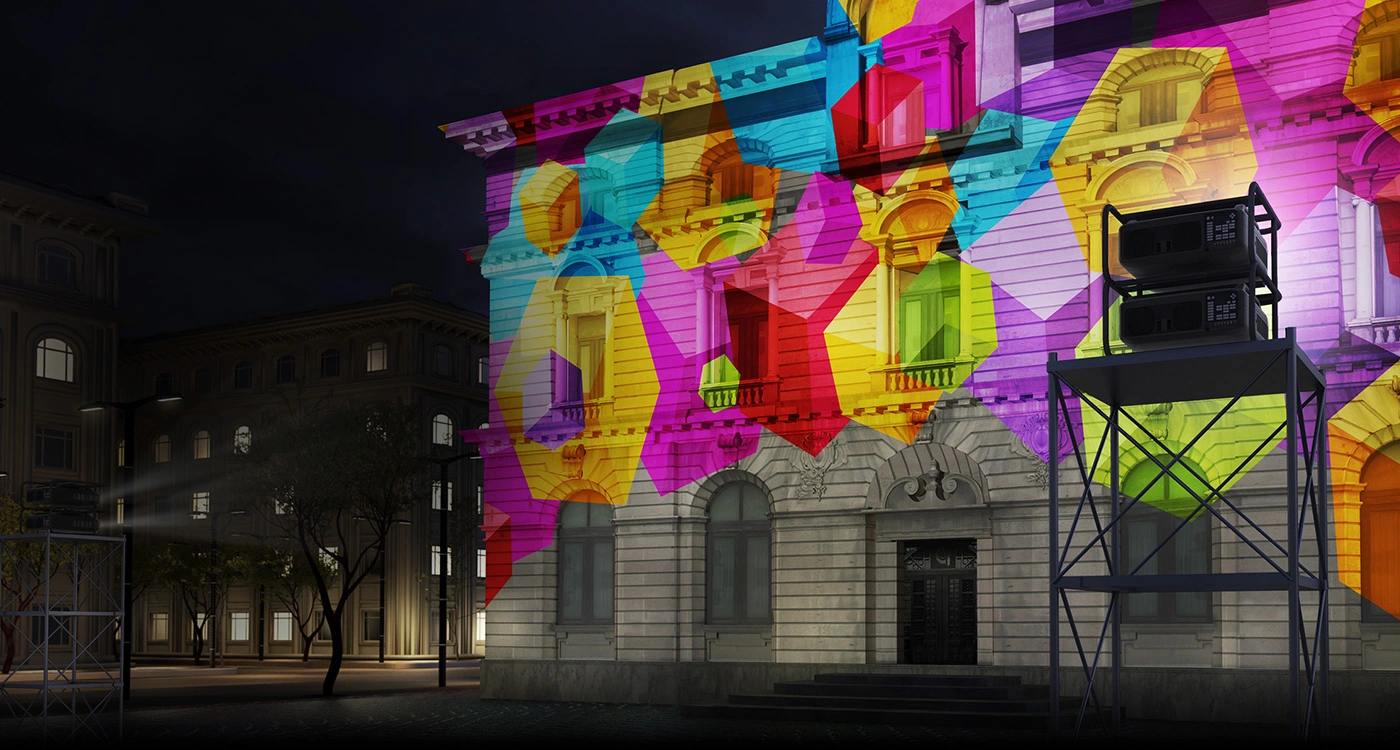
A big reason projection mapping has grown so quickly is that the technology around it has improved dramatically.
A few years ago, large-scale mapping projects were expensive, bulky, and difficult to pull off outside major productions. That’s changed quite a bit.
Projectors have become brighter without becoming impossibly large. Software has become easier to work with. And the gap between creative ambition and technical execution has narrowed.
One of the biggest changes has been the rise of high-brightness projectors that can handle large outdoor surfaces far more effectively than older systems could. Architectural mapping used to require extremely specialised setups. Today, compact 30,000-lumen and 40,000-lumen projectors are making those installations much more practical.
Projectors can now produce high-resolution, bright and colourful images covering large areas and adapting to different surfaces. A whole host of surfaces can be used for AV projection mapping.
Today, there are options to use camera-assisted feedback to speed up image alignment. There have been experiments with AI-generated textures that adapt in real time to physical surfaces. The direction is pretty clear. Projection mapping systems are becoming smarter, faster, and easier to deploy.
Another reason for the rise is audience expectation.
People are harder to impress now. Static screens don’t always hold attention the way they once did. Projection mapping changes the environment itself, which makes the experience feel more physical and immediate.
That applies across industries.
Buildings and public landmarks are some of the most common projection surfaces because the architecture already gives the visuals character to work with.
Some installations even work with natural environments like water, trees, or rock formations where the projections interact with uneven textures and movement.
Enhanced Real-World Examples of Projection Mapping
Sydney Opera House (Vivid Sydney Festival)
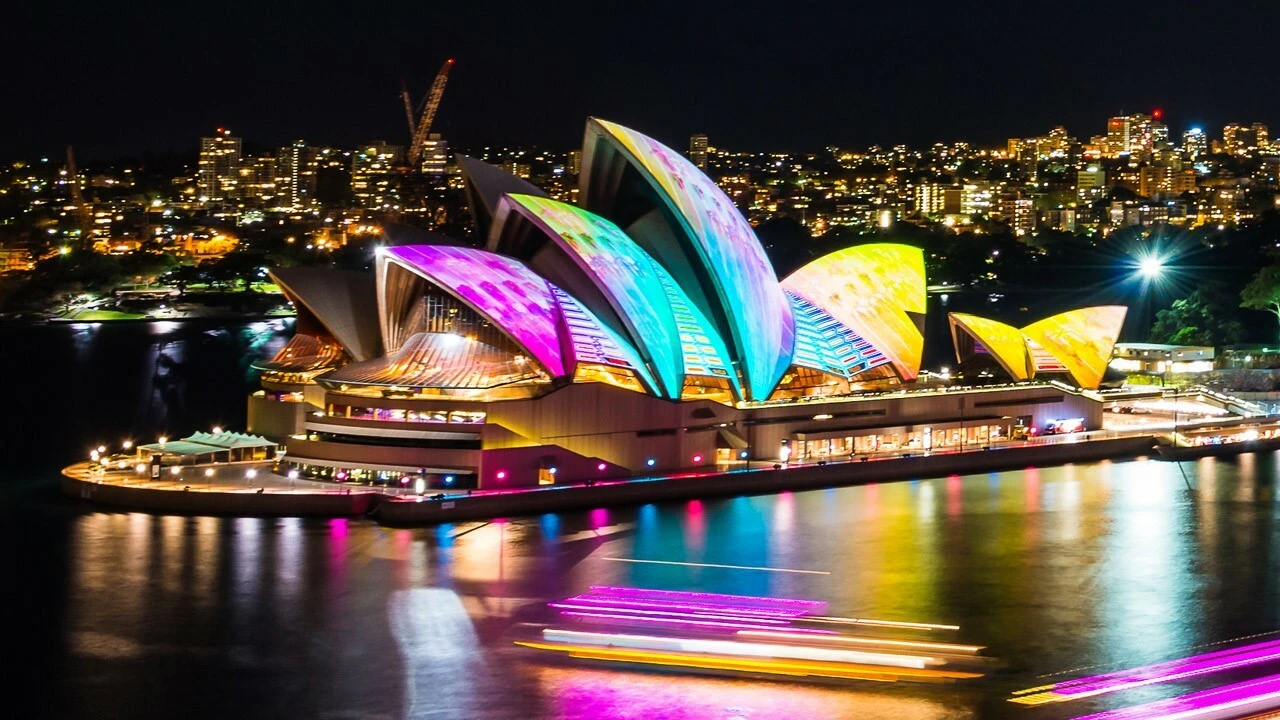
Image credit – xchange.avixa.org
Gateway of India (NBA India Event)
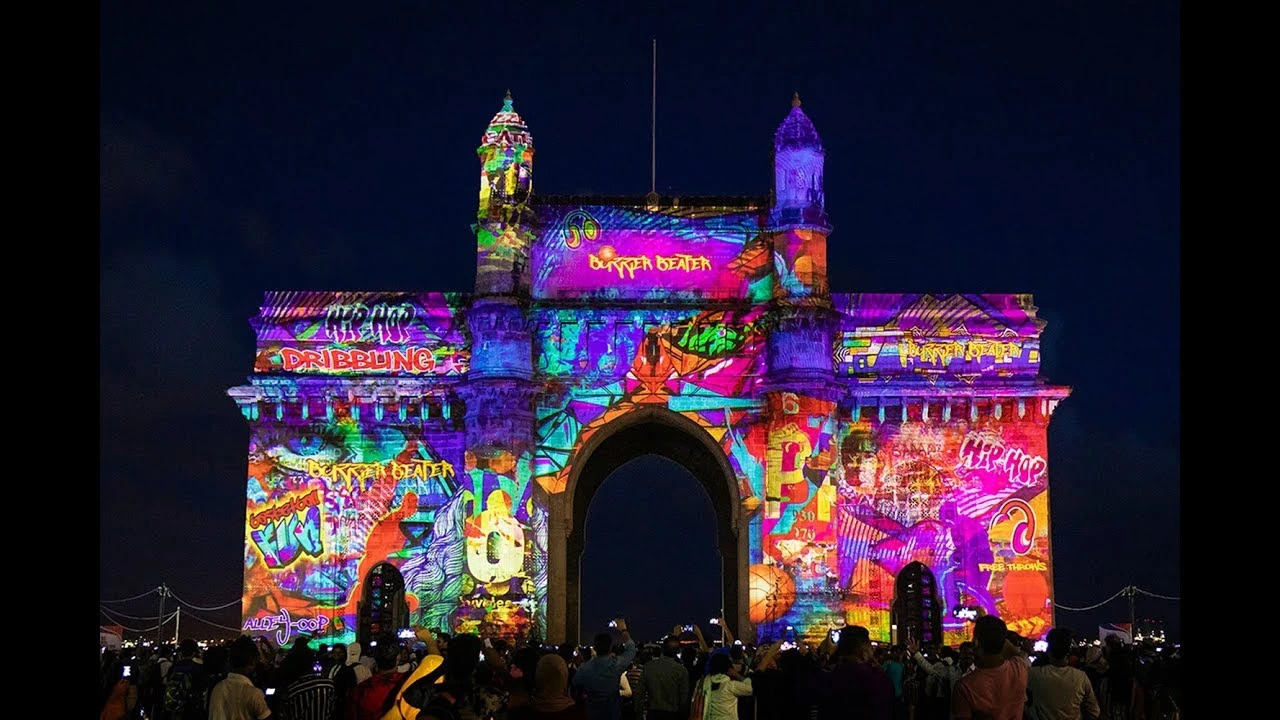
Image credit – Youtube
Different Types of Projection Mapping
Projection mapping is usually grouped based on the type of surface or environment being transformed.
- Architectural Mapping
This is the large-scale version most people recognise first. Buildings, monuments, and public landmarks become the projection surface. - Object Mapping
This is commonly used on things like cars, sculptures, stage elements, and even product displays during launches. - Stage and Event Mapping
You see this a lot in concerts and stage productions where the environment needs to keep changing without physically rebuilding the set every few minutes. - Interactive Mapping
Some setups also react to the audience directly. Movement, gestures, or touch inputs can trigger changes in the visuals while the experience is happening. - Environmental or Space Mapping
Sometimes the goal isn’t a single object at all. The entire space becomes part of the projection, including walls, ceilings, and floors, so people feel surrounded by the visuals rather than just watching them.
Benefits and Applications of Projection Mapping
One of the biggest strengths of projection mapping is that it tends to make experiences memorable, especially for brands and live events where audience recall matters.
It also changes how spaces are designed. Instead of physically rebuilding sets or environments for every new concept, visuals can completely alter the mood and appearance of the same venue multiple times over. For event companies and production teams, that flexibility can save both time and cost over repeated installations.
What works for a concert stage can often be adapted for museums, retail spaces, exhibitions, hospitality environments, or public installations. In live performances, it allows the stage to keep changing visually without crews having to constantly rebuild physical structures between scenes.
Historical scenes, scientific concepts, or cultural stories can be layered directly onto walls, artefacts, or rooms so visitors experience them visually instead of only reading about them in museums.
Retail brands usually use projection mapping when they want a launch or display to feel harder to ignore.
Private events have started adopting it too. Weddings, receptions, and themed celebrations now use projection mapping to change the atmosphere of a venue.
Conclusion
Projection mapping is no longer limited to concerts or large public spectacles. It’s becoming part of how brands, designers, museums, and event spaces think about storytelling itself.
What makes the technology interesting is that it changes the environment rather than adding another screen to it. That creates a very different kind of audience response.
As AI-assisted calibration, real-time rendering, and AR/VR integration continue to improve, projection mapping will likely become more interactive and more responsive than it is today.
And as audiences continue expecting experiences that feel immersive rather than passive, projection mapping is only going to become more relevant across industries.
FAQ’s
Projection mapping is a technique where projectors cast videos or images onto irregular surfaces (buildings, props, natural objects), turning them into dynamic, immersive displays by aligning visuals precisely to their contours.
Because it enables highly creative, memorable experiences — transforming venues into canvases for storytelling, activating spaces in ways that static screens or displays simply can’t.
It offers creative flexibility, reduces physical set construction costs, supports interactivity (with sensors or AR), and enables dynamic branding or storytelling that evolves in real time.
Projection mapping works by projecting visuals onto real-world surfaces (walls, objects, structures) and aligning them precisely using specialized software.
It creates immersive experiences by transforming surfaces into dynamic 3D visuals with motion, light, and interaction, making environments feel alive.
Projection mapping turns a room into magic by projecting dynamic visuals onto walls, floors, and objects, perfectly aligned to the space.
This creates immersive 3D effects, motion, and interactive environments, making the room feel completely transformed.
Projection mapping can be moderately to highly complex, depending on the surface, scale, and level of interactivity required.
Simple setups are manageable, but advanced projects need specialized software, precise calibration, and technical expertise.