


The AV systems deployed in schools and universities today are doing more than just telling the students what they need to know. Educators are using them to encourage students to engage and collaborate, leading to excellent retention of information.
Understanding Digital Signage as an Educational Technology
Today’s digital signage solutions feature both interactive touchscreen displays and large screens for projecting digital content. These classroom AV solutions encourage students to interact with the devices and each other in small groups. This creates even more meaningful and retentive educational opportunities.
Digital displays use a medium that most students are already comfortable using. Today’s digitally native students can navigate devices and use them as part of the learning process. Screens and displays are second nature to students today. Consuming digitally-displayed content captivates and motivates young people to stay engaged. Teachers can leverage digital signage to connect classrooms with other students and places around the world. Distance education technologies are an exciting addition to classroom learning experience.
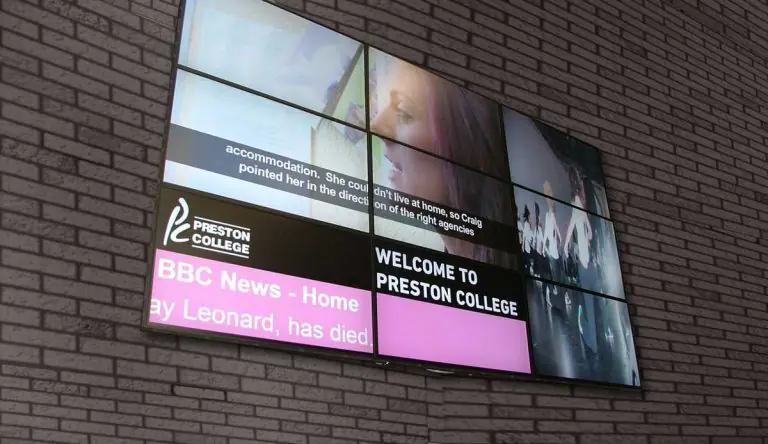
Most students process visual cues quicker than written prose. Access to infographics, videos, interactive 3D models and games can create exciting learning connections that students of any age can use to absorb and retain information. Interactive displays which are a part of digital signage have the ability to allow students to touch, play, and consume material in a visually appealing manner. Textbooks cannot match the dynamic and user-friendly nature of educational displays.
Highlighting the benefits of Digital Signage in Education
Educators can work with AV integrators to integrate digital signage and harness the following benefits.
- Engagement: Diverse functionality and visual cues provided by digital signage solutions often hold student attention better than textbooks and lectures.
- Easy collaboration: Students, educators, and real-world professionals can all tap into the power of digital signage for group interactions, interviews, presentations, and projects.
- Environmental sustainability: The use of digital signage and personal devices reduces or eliminates the need for paper copies in the classroom. This can empower classrooms to go completely paperless.
- Control for educators: Administrators and educators hold control over the technology to improve classroom control and focus during use. They can also pass on control to students to encourage creativity and foster empowerment and self-confidence.
- Cost-efficiency: Digital solutions empower students to travel without leaving the classroom. Virtual field trips and remote guest lectures enable students to see and explore new concepts, cultures, and places at no added cost.
Advancements in educational technologies promise to erase physical and technological boundaries and opens up educational environments, enabling students to achieve their full potential.
(Content and image courtesy: www.medium.com)
FAQ’s
Digital signage displays announcements, schedules, and learning content effectively. It engages students with multimedia and interactive content. This technology complements AV systems and enhances classroom communication.
Yes, visually rich content aids understanding and retention. Real-time updates and interactive modules promote engagement. Students benefit from immersive, dynamic learning experiences.
Proper AV ensures clear audio, bright visuals, and seamless content sharing. Teachers can deliver lessons efficiently. Integration creates an effective, distraction-free learning environment.
Yes, it supports online participation, content streaming, and recording lessons. Remote students can access the same visual content. Digital signage ensures inclusive, consistent learning.
Screen size, placement, content management, and interactivity are key. Ease of use and maintenance ensures long-term effectiveness. Planning maximizes engagement, learning, and technology ROI.