


Why immersive visual systems are becoming central to modern enterprise strategy
In the age of information overload, static emails and uninspired PowerPoint decks no longer cut through the noise. Today’s enterprises are leaning into a new era of high-impact, immersive communication driven by visual technology and at the heart of this evolution is the LED video wall. Once reserved for command centres or high-end broadcast sets, LED walls are now redefining how companies communicate internally and externally.
From revitalising dull boardrooms to turning corporate lobbies into digital brand showcases, LED walls are fast becoming a cornerstone of the modern enterprise’s communication infrastructure. This isn’t just about better screens—it’s about transforming how messages are conveyed, absorbed and acted upon.
What Are LED Video Walls?
LED video walls are modular, bezel-free displays with fine-pitch light-emitting diode panels. Their seamless composition and vibrant luminosity allow for dynamic content to be delivered at almost any scale, whether in a 10-foot boardroom or across a 100-foot lobby wall. Unlike LCD panels, which suffer from visual breaks and brightness inconsistencies, LED video walls deliver seamless uniformity and exceptional clarity, even in high ambient light.
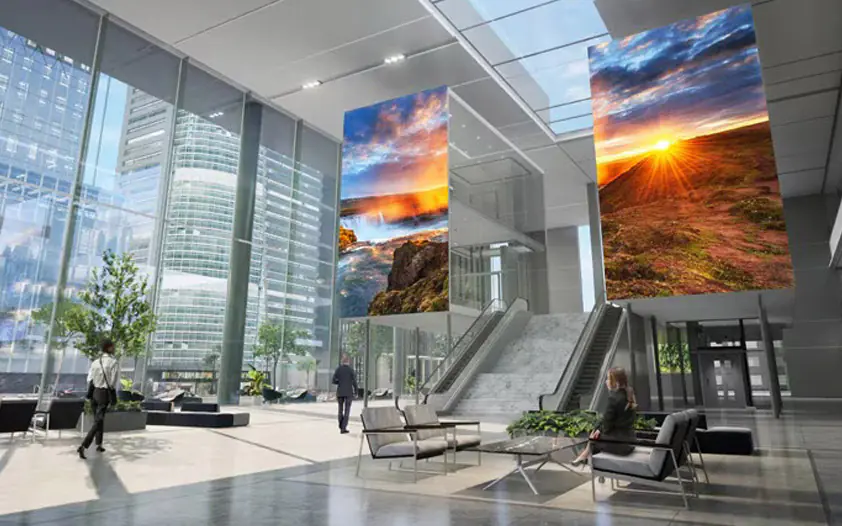
More importantly, their modular nature allows organisations to scale displays to virtually any size and layout, while supporting multiple content zones simultaneously. This means different data streams, visuals, or media can be displayed in parallel, empowering teams to engage with layered information at a glance—something traditional displays simply cannot match.
This modularity also allows customisation to fit architectural elements or branding ambitions. They can be curved, suspended, or even embedded into structural facades—integrating technology and design in ways that foster innovation. These walls are not just displays; they are digital infrastructure.
Transforming Internal Communication: Clarity at Scale
LED video walls are not just dazzling displays—they’re practical tools embedded across enterprise environments to elevate communication, boost engagement and enable clarity at scale. Here’s how forward-looking organisations are deploying them across various corporate scenarios:
- Executive Town Halls and Leadership Broadcasts:
Large-scale LED walls enable vibrant, immersive town hall experiences, whether on-site or streamed globally. These walls allow leadership to present strategy, celebrate wins, or navigate crises with the gravitas and visual clarity that builds trust and engagement across dispersed teams.
- Employee Communication and Internal Branding:
From hallways to cafeterias, LED walls deliver a steady stream of internal messaging—cultural values, DEI updates, employee milestones, or real-time performance metrics. This ambient communication helps reinforce alignment and morale without adding to inbox fatigue.
- Conference and Boardroom Visualisation:
In strategic spaces like boardrooms and executive suites, LED walls replace patchwork displays and projectors with a seamless canvas. They support multi-source inputs—financial dashboards, live feeds, market updates—enabling faster decision-making and more engaging presentations.
- Training and Development Environments:
Interactive LED walls enhance learning retention and session dynamics in training rooms and innovation hubs. They allow instructors to manipulate complex visual content, like process maps or 3D simulations, while keeping remote participants fully engaged.
- Mission-Critical Operations and Control Rooms:
In network operations centres (NOCs), security operation centres (SOCs), or manufacturing control rooms, LED video walls serve as real-time intelligence interfaces. Operators monitor multiple data streams simultaneously, enabling swift action and situational awareness without visual fatigue.
- Welcome Areas and Lobbies:
Reception zones become high-impact brand spaces with LED walls displaying personalised greetings, dynamic company narratives, or ESG storytelling. It sets the tone for visitors, partners and employees the moment they enter the premises.
- Digital Signage and Corporate Announcement
Unlike static displays or printed signage, LED video walls can adapt on demand, delivering everything from compliance alerts to campus-wide announcements and cross-functional updates, all managed through a central content system.
- Cross-Functional War Rooms and Collaboration Zones
In agile work environments, LED walls allow teams to view and interact with layered content across disciplines—sales forecasts, product timelines, customer feedback—all at once. This breaks silos and accelerates coordination.
Across all these applications, what makes LED video walls transformative is their combination of scalability, real-time content adaptability and emotional impact. They do more than inform—they immerse, persuade and unify.
Meeting Reinvented: Collaboration Powered by LED Walls
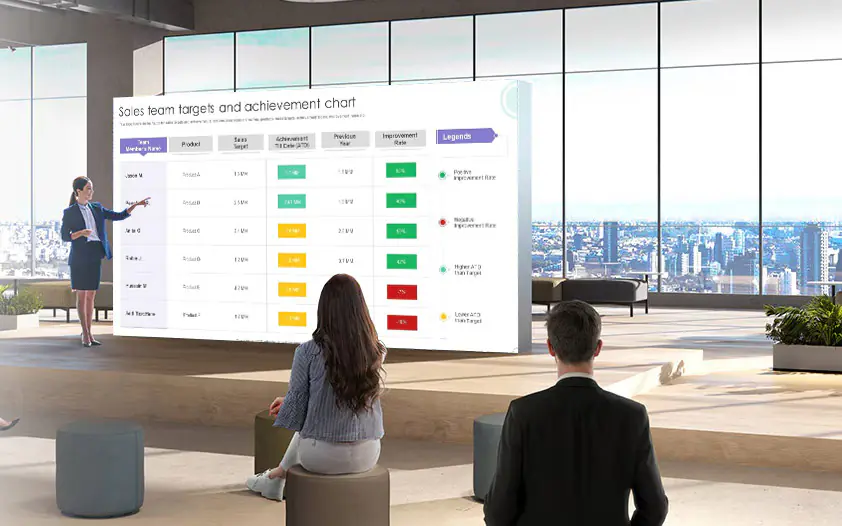
Modern collaboration isn’t about putting people in the same room—it’s about making information universally visible and interactive. LED video walls are redefining meeting rooms by enabling multi-source content display and enhancing visibility for all participants, whether they’re in the room or joining remotely.
Imagine a leadership meeting where live financial dashboards, customer feedback feeds and product roadmap slides are shown side-by-side on a single, high-resolution display. Or consider a product design sprint where teams can manipulate 3D renderings in real-time across an expansive digital canvas. LED walls empower this type of interaction by enabling scale, clarity and fluid data integration.
These displays also eliminate the awkward workarounds of outdated projectors or mismatched monitor setups. They are designed to be platform-agnostic, supporting integration with Microsoft Teams Rooms, Zoom, Google Meet and a variety of collaborative whiteboarding tools. The result is a frictionless, professional-grade experience that matches the pace of modern decision-making.
The Digital Welcome: Client and Stakeholder Experience
First impressions are increasingly digital and LED walls offer a way to control and elevate that impression. In reception areas, innovation centres, or executive briefing rooms, LED video walls act as living brand ambassadors. They can be programmed to greet guests by name, showcase tailored content, or deliver immersive walkthroughs of a company’s journey, products, or ESG commitments.
This level of personalisation and production value enhances perceived professionalism and investment. It subtly communicates that the company is forward-thinking, customer-centric and technologically sophisticated. For investor pitches, partner summits, or client onboarding, LED walls make the message not only visible but unforgettable.
They also lend flexibility: different stakeholders can experience different narratives in the same space simply through content programming, all without touching the hardware.
The Strategic Backbone: Real-Time Info and Digital Signage
LED walls go well beyond brand storytelling. In operational areas like manufacturing floors, control centres, cafeterias, or corporate campuses, they double as strategic signage platforms. Content ranges from production metrics and shift schedules to compliance updates and HR messaging—all displayed in real-time.
With a robust content management system, enterprise communicators can push dynamic messaging, automate scheduling and trigger alerts for specific audiences or times. For example, an LED wall in a warehouse might show a safety bulletin in the morning and then switch to a performance leaderboard by midday.
This centralisation reduces clutter, improves message retention and ensures that vital information is timely, targeted and trusted. In this way, LED walls become part of an organisation’s operational nervous system.
Seamless Integration and Content Intelligence
The true value of LED video walls is unlocked through their integration with enterprise ecosystems. Today’s LED platforms support API-based connectivity, enabling dynamic feeds from tools like SharePoint, Power BI, Salesforce, or internal analytics dashboards. Data visualisations update in real-time and content can be targeted based on time, location, or audience profile.
Some leading systems are now incorporating AI-driven logic, where the wall can decide what content to display based on engagement analytics or external events (e.g., market shifts, supply chain alerts).
Advanced content management also supports multi-zone display capabilities—meaning one wall can simultaneously deliver HR messaging, financial dashboards and live news feeds, each occupying a section of the screen. This level of contextual layering dramatically improves information throughput without overwhelming the viewer.
The Future of LED in the Enterprise in a Visual-First World
The pace of innovation in LED display technology is accelerating. Resolutions are reaching pixel pitches previously thought impractical for indoor use. Curved, transparent and even flexible displays are enabling applications in architecture and experiential design. Interactive capabilities such as gesture recognition and spatial audio are turning passive walls into responsive environments.
Soon, combined with AI, LED walls could even autonomously adapt content to individual viewer profiles or environmental conditions. As enterprises move toward experiential communication, LED video walls will not merely support messaging; they will shape the medium through which it’s created and consumed.
In the modern workplace, communication is no longer about distribution, it’s also about engagement and experience. LED video walls represent a strategic leap toward a visual-first culture, where messages are not only shared but staged, not only understood but remembered.
Beyond their immersive capabilities, LED walls offer strong long-term value through energy efficiency, low maintenance and modular design that aligns with both fiscal responsibility and sustainability goals. As organisations grapple with complexity, speed and scale, investing in immersive visual infrastructure isn’t just forward-thinking, it’s foundational. The future of corporate communication is already illuminated. The only question is: how will you make it shine?
FAQ’s
Video walls are large-scale displays made by combining multiple screens or panels to form a single cohesive visual experience. They are mainly used in environments where impactful visuals, real-time information, or dynamic content delivery is essential. Their applications span a variety of industries, each leveraging the technology for specific goals related to communication, engagement, monitoring, or branding.
1. Corporate and Enterprise Settings
In corporate lobbies, boardrooms and presentation spaces, video walls serve as a powerful branding and communication tool. In lobbies, they can showcase a company’s history, products, or real-time social media feeds. In executive boardrooms or collaboration spaces, high-resolution video walls are used for presentations, video conferencing and data visualisation, offering clarity and flexibility beyond that of single displays.
2. Retail and Shopping Malls
Retailers use video walls for immersive digital signage that captures attention and drives customer engagement. From promoting sales and seasonal campaigns to creating brand storytelling experiences, these displays are designed to be visually striking and dynamic. Their scalability makes them ideal for both flagship stores and large shopping environments.
3. Hospitality and Entertainment Venues
Hotels, casinos, stadiums and theaters often employ video walls to enhance ambiance, promote upcoming events, or deliver live feeds. In sports arenas, they are used for instant replays, scoreboards and advertising. In hotel lobbies or conference centres, they support events, showcase brand imagery, or guide guests with schedules and information.
4. Education and Museums
In universities and museums, video walls are used for educational engagement and public interaction. They support digital exhibits, interactive learning stations and large lecture halls where visibility and clarity are paramount.
5. Broadcast and Media Production
Studios often use video walls as dynamic backdrops that can be customised for different segments, offering flexibility and visual appeal. Newsrooms use them to display real-time data, feeds and graphics.
6. Control Rooms and Command Centres
One of the most common uses of video walls is in mission-critical environments such as traffic control centres, utility monitoring stations, emergency operations centres and security control rooms. Here, video walls display multiple data feeds simultaneously—like live camera footage, maps, analytics dashboards and incident reports. Operators rely on this comprehensive visibility to make quick, informed decisions.
Video walls are mainly used in high-traffic, high-impact environments where visibility, flexibility and visual performance are critical. Their ability to display multiple types of content at once across a seamless, scalable canvas makes them indispensable in both operational and experiential contexts.
LED walls provide a large, seamless, high-brightness canvas that replaces static slides and boring presentations. They make internal messaging immersive and more memorable, helping enterprises break through information overload.
By using modular, multi-zone LED walls, companies can display live dashboards, video feeds, and real-time data side-by-side. Leadership can present strategy and KPIs in a visually compelling way that engages every employee.
Yes, they can be installed in lobbies, welcome areas, or collaboration zones. There, they act as digital brand canvases, broadcasting corporate stories, real-time announcements, or wall-filling visuals that impress visitors and staff.
In operations or control rooms, LED video walls allow teams to monitor multiple live data streams at once. This enhances situational awareness, speeds up decision-making, and helps operators respond swiftly to changing conditions.
LED walls in control rooms provide high brightness, seamless display, and clear visibility, ensuring operators can monitor critical data without distortion or gaps.
They also offer 24/7 reliability and flexible scaling, making them ideal for mission-critical environments like security, traffic, and operations centers.
To create a video wall, choose the display type (LED or LCD), decide the layout (like 2×2 or 3×3), and install panels using a proper mounting structure.
Then connect all screens to a video wall controller, configure the system, and calibrate for seamless display and performance.