


Unified Communications (UC) has been a hot topic in the enterprise communication sector for the last few years now. It promises to streamline and unify communications in this and fast-paced business environment. Unified Communications gives businesses the option and agility to easily select an apt mode of communication, at any given time or place. It aims to add an omnipresent nature to the modes of communication.
Myth 1: Unified Communications is expensive
This is one of the most common myths about implementing a seamless Unified Communications Solution in your business. Most UC’s are almost modular in nature. They come with features and functionalities that can be customized as per the requirement and nature of the business. They are designed to integrate into your existing set-up avoiding additional infrastructure costs. Proper planning and a holistic approach during implementation can help save costs and add business value.
Myth 2: Unified Communications is complicated
On the surface, Unified Communications may appear complicated. However, most naysayers fail to understand that UC’s core concepts are based on unifying both, communication and its modes. People assume that implementing a Unified Communications involves replacing your current communication infrastructure. Contrary to this belief, UC solutions are designed to integrate into your existing set-up and are based on standard workflows and interfaces that most people are already familiar with.
Myth 3: Unified Communication is only for large enterprises
When computers were introduced, most people assumed that it would be a segment of technology accessible only to government agencies or large enterprises. Look at it now! It has seeped into most aspects and segments of our day-to-day lives. Unified Communications may sound daunting thanks to its nomenclature. However, UC solutions can find itself in many applications such as Small and Medium-sized Businesses (SMB), large enterprises, government intuitions, education institution, and various other requirements with multiple-communication channels.
Myth 4: All Unified Communication solutions are the same
We saved the most obvious myth for the last. Needless to say, all UC solutions are not the same. UC solution providers understand the elements of every client’s requirement and integrate a solution into the existing infrastructure. Communication challenges faced by people vary and are heavily influenced by numerous variables. Keeping this in mind, UC solution developers keep their arsenal of solutions scalable and customizable to a certain degree. In a nutshell, an ideal Unified Communications solution reflects the communication challenges faced and provide a viable solution.
We hope our blog helped you debunk various untrue myths about integrating Unified Communications in your business. Have something to add? Use the comment section below to share your thoughts.
FAQ’s
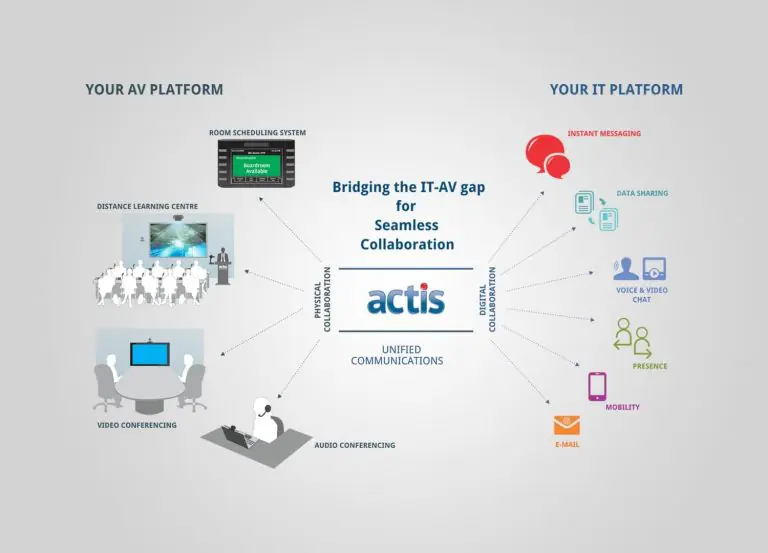
Unified communication (UC) integrates messaging, video, voice, and collaboration tools into one platform. It simplifies workflows, reduces tool fragmentation, and enhances productivity. UC allows teams to communicate seamlessly across devices and locations.
Many believe UC is too complex, expensive, or unnecessary for small businesses. Some think it replaces face-to-face interaction. In reality, UC scales easily, saves costs, and complements in-person collaboration.
UC centralizes communication, reducing missed messages and delays. Integrated scheduling, messaging, and conferencing improve team coordination. It ensures faster decision-making and streamlines collaboration across departments.
Yes, UC allows remote employees to access all communication channels from anywhere. It maintains continuity, engagement, and productivity. Hybrid teams can collaborate without technological barriers or communication gaps.
Proper planning, integration with existing systems, and user training are crucial. Scalability and security should be prioritized. Successful UC adoption leads to improved efficiency, communication, and team collaboration.
Unified Communications (UC) represents a paradigm shift in the way businesses and individuals communicate, marking a transition from traditional, siloed communication methods to a more integrated and cohesive approach.
It is the integration of real-time communication services with non-real-time communication services that includes IM (Chat), VoIP, video conferencing, data sharing, presence information (knowing if someone is available or busy), email, voicemail and messaging.
UC provides a consistent interface across multiple devices and media types. Users can seamlessly switch between communication modes, enhancing productivity and collaboration. Imagine receiving a voicemail and choosing to access it via email or a mobile device. If the sender is online, an immediate text chat or video call can be initiated. UC isn’t just a technological solution, it’s a strategic approach to organisational communication. By breaking down information silos, UC fosters a connected work environment. Team members can interact naturally, regardless of their physical location.
It empowers businesses to navigate the complexities of the digital era confidently. It’s really about connectivity, collaboration, and flexibility — essential ingredients for success in today’s dynamic work landscape.