


Luxury today isn’t about excess — it’s about intelligence, comfort and seamless control
Today, luxury is far more invisible. It’s the ease with which light, temperature, entertainment and security come together to create a living experience that feels effortless.
At the heart of this shift lies smart home automation, a fusion of design, technology and intuition that’s redefining what it means to live well. Across India’s metropolitan centres and emerging premium residential markets, automation is no longer a novelty. It’s the signature of contemporary luxury.
The Core Promise of Smart Living
True home automation goes well beyond app-based control. It’s about orchestrating multiple systems into a single, harmonious experience like lighting that changes as the sun sets, climate that adjusts as you move between rooms, or a single “Good Night” scene that secures your home and dims every light in an instant.
Luxury homeowners today seek technology that responds, not reacts. Automation creates an environment that anticipates routines such as morning wake-up sequences that open blinds and start a preferred playlist, or entertainment zones that activate with a single voice command.
This level of seamless control transforms living spaces into dynamic, responsive environments, where every action feels intuitive rather than technical.
Seamless Integration: The Invisible Engine of Luxury
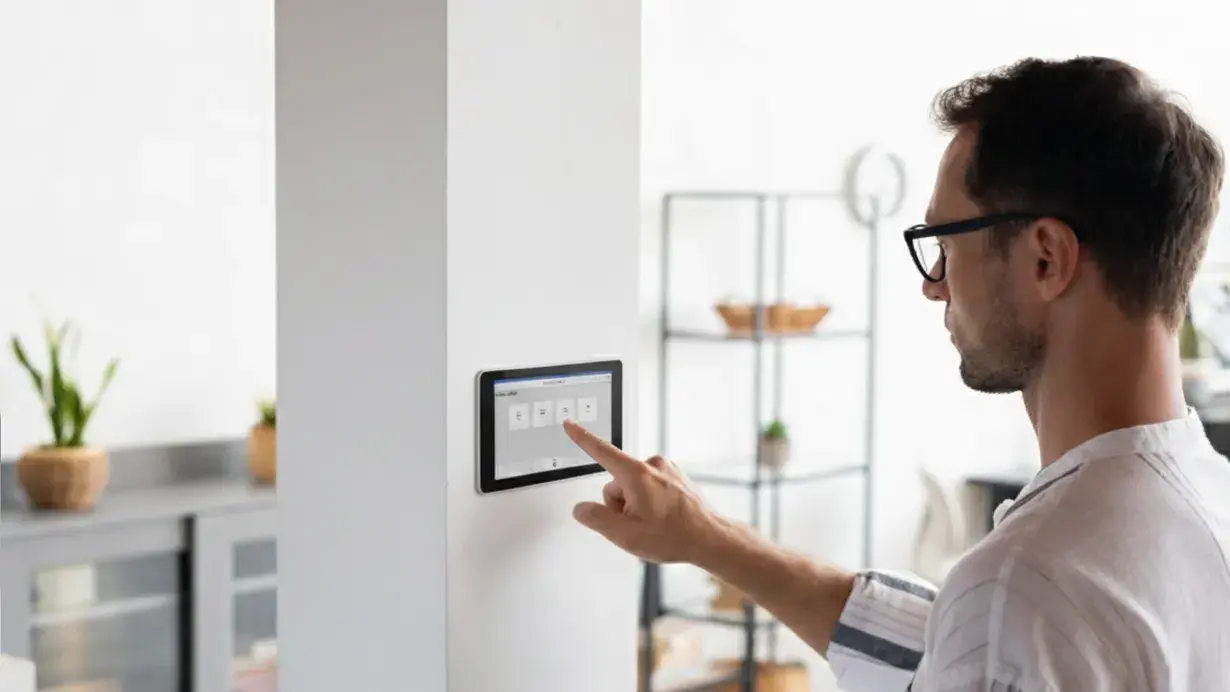
Integration is what separates a truly “smart” home from one that’s merely gadget-rich. Behind the elegance of a minimalist living room or a sunlit lounge lies a sophisticated web of interoperable systems that include lighting, HVAC, audio, video, shading and security, all connected through a central control architecture.
Platforms such as Crestron and Lutron enable this interoperability, allowing different systems to communicate over unified protocols. For the user, this means a single interface such as a touchscreen panel, a smartphone app or a voice assistant that replaces the clutter of switches and remotes.
The best integrations are invisible. They allow homeowners to experience comfort, convenience and control without ever seeing the technology that powers it.
Design and Aesthetics: When Technology Disappears into Architecture
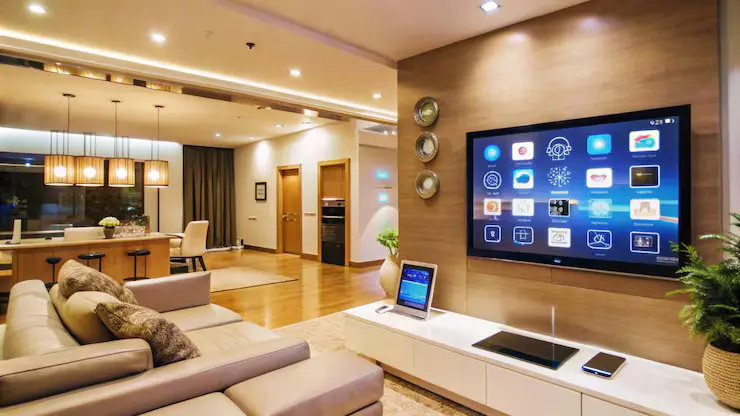
In luxury homes, technology must complement design, not dominate it. Today’s automation solutions achieve precisely that by merging form with function.
Minimalist keypads replace bulky switchboards, motorised drapes glide silently into place and concealed in-wall speakers deliver immersive sound without disturbing the room’s aesthetic harmony. Each element is chosen not just for performance, but for how it feels within a curated environment. Some examples include sleek matte-finish panels in brushed metal or soft-touch glass, touchscreens framed in neutral tones that blend with stone or wood surfaces and sensor housings colour-matched to walls and ceilings for near invisibility.
Textures and materials now play a defining role in automation design. Lutron keypads, for example, come in finishes ranging from warm bronze and graphite to alabaster white, complementing everything from minimalist Scandinavian interiors to earthy Indian contemporary spaces. Even the glow of LED indicators is softened to harmonise with ambient lighting palettes, creating a sense of quiet sophistication rather than distraction.
This design intelligence requires deep collaboration which includes AV consultants, architects and interior designers working together to ensure that technology enhances rather than intrudes. When done right, automation becomes an architectural layer, quietly enabling comfort while preserving visual serenity.
Personalisation and Lifestyle Adaptation
The modern smart home is not just programmable; it’s perceptive. Intelligent sensors and AI-driven algorithms help systems learn from usage patterns, creating a uniquely tailored experience.
Lights may gradually brighten to simulate sunrise as you wake. The air conditioning may adapt based on outdoor temperature and humidity. Even entertainment systems can tailor playlists or sound levels depending on the time of day or who’s home.
This degree of individuation defines a shift from manual convenience to environmental intelligence, where the home evolves with its inhabitants. It’s a hallmark of ultra-luxury living: not static opulence, but dynamic comfort.
Security and Peace of Mind: The Invisible Layer of Comfort
Luxury is incomplete without the assurance of safety. Smart automation enhances security not by adding barriers, but by integrating intelligence.
CCTV cameras, video doorbells, intrusion sensors and smart locks can all be tied into a single system that’s accessible from anywhere in the world. Motion-triggered alerts, remote access control and real-time monitoring ensure that homeowners remain connected and protected, whether they’re inside their residence or thousands of kilometres away.
This fusion of safety and convenience defines modern luxury: security that feels reassuring, not intrusive.
Interfaces of the Future: Voice, Apps and AI
As technology matures, control is becoming increasingly natural. Voice assistants, gesture-based controls and context-aware systems are replacing traditional interfaces.
A simple phrase like “Alexa, set the mood for dinner” can trigger lighting, music and temperature adjustments simultaneously. High-end automation platforms are also refining voice recognition for Indian accents and multi-lingual households, ensuring that these systems feel personal and intuitive.
Meanwhile, apart from tactile keypads, custom apps and touchpanels are being designed with luxury UX principles that include clean layouts, contextual feedback and seamless responsiveness. The more effortless the interface, the more elevated the experience.
Smart Entertainment and Multi-Room AV
No discussion of luxury living is complete without entertainment and here, automation creates some of its most immersive experiences.
Multi-room audio and video systems distribute content across spaces with impeccable synchronisation. Home cinemas, equipped with automated lighting, motorised screens and acoustically tuned environments, deliver theatre-grade experiences within private residences.
Even casual moments like watching news in the kitchen or streaming music by the pool, are made richer through centralised control and distribution. The ability to curate ambience and content effortlessly is the emotional core of smart living.
Sustainability as the New Luxury
In a world increasingly defined by ecological consciousness, sustainability has become the most sophisticated form of luxury. Smart home automation plays a central role here, optimising energy use without compromising comfort.
Occupancy sensors ensure that lights and HVAC systems run only when needed. Daylight harvesting adjusts indoor lighting based on natural illumination. Automated blinds and shading reduce heat gain, easing the load on air conditioning.
In India, where energy efficiency intersects with environmental responsibility, this balance between indulgence and awareness is redefining what it means to live luxuriously. Smart homes, by design, make sustainability effortless, a quiet act of refinement rather than restraint.
The India Context: Where Aspirations Meet Innovation
India’s luxury housing market is maturing rapidly. Smart home automation has moved from aspiration to expectation among high-net-worth individuals, returning NRIs and next-generation homeowners.
Developers in metros like Mumbai, Delhi NCR, Bengaluru and Hyderabad now integrate automation-ready infrastructure into premium projects, reflecting a cultural shift toward intelligent comfort. This evolution is no longer limited to villas and penthouses. Premium service apartments, branded residences and luxury rental properties are also embracing automation to differentiate themselves. Guests and residents alike now expect features such as app-controlled lighting, integrated entertainment systems and touchless access, conveniences once reserved for bespoke homes but now becoming standard markers of urban sophistication.
However, the Indian context presents unique challenges. Varying grid reliability, diverse architectural styles and retrofit requirements in older homes are common features of Indian homes. This makes expert system design and reliable implementation critical to ensuring that the promise of smart luxury is fully realised.
Design Intelligence That Provides a Subtle Edge
Smart home automation is no longer a luxury add-on, it’s the framework upon which the modern Indian luxury home is now built. It enhances aesthetics, optimises energy, safeguards security and personalises comfort in ways that are both subtle and transformative.
For the discerning homeowner, the ultimate luxury today isn’t owning technology, it’s living in harmony with it. At Actis, we bring together decades of expertise in AV, control systems and experiential environments to design automation solutions that are as refined as they are robust.
Every project is guided by a singular vision: technology should elevate comfort and design, not compete with it.
FAQ’s
Yes. Most leading automation platforms now offer retrofit solutions that integrate wirelessly with existing infrastructure. This means even heritage homes or older apartments can gain intelligent control without major structural changes.
High-end automation ecosystems are built on scalable architectures. With modular components and firmware upgrades, they can adapt to new standards, devices and protocols, ensuring longevity of investment.
Premium integrators design with redundancies in place, including backup power, surge protection and local control options. This ensures continuity of operation and peace of mind even in unpredictable conditions.
Broadly speaking, yes, smart door locks can be easily integrated with existing home automation systems but there are a few caveats and considerations that users need to be aware of
1) Compatibility: Ensure the lock you’re choosing works with your existing door type/locking mechanism and see how well it fits with your broader smart home ecosystems protocols, including devices like smart speakers, security cameras and other home automation devices.
2) Security Features: Check what kind of authentication the smart lock provides (biometrics such as fingerprint recognition or facial recognition), to prevent unauthorised access and look for tamper alerts and robust encryption to safeguard communication between it and your smartphone.
3) Accessibility: Consider how other users and family members will access the lock, such as keyless entry using codes or fingerprint scans and voice control for easy access.
4) Durability and Maintenance: As with all electronics, look for good warranties and read reviews to gauge their reliability and maintenance requirements, such as battery replacements.
5) Remote Access: Ensure the lock offers secure remote access capabilities through a dedicated mobile app and also via your home control system, with reliable and robust connections.
6) Power Source: Consider the battery life and backup options, such as low-battery alerts and fallbacks (redundacies are vital), to minimise the risk of being locked out
Once you’ve determined a budget, look for locks that offer the necessary features within that price. Choose a lock that integrates seamlessly with your existing smart home systems, allowing for centralised control and automation.
Start a smart home by choosing a platform like Google Home or Amazon Alexa and adding basic devices like smart lights or plugs.
Then expand gradually with automation (schedules, voice control, sensors) to improve comfort, security, and energy efficiency.
Automate your home by using a central platform like Google Home or Amazon Alexa to connect smart lights, speakers, and thermostats.
Create scenes and schedules (e.g., “Movie Mode” dims lights, plays music, sets temperature) for seamless, one-tap or voice-controlled automation.