


Discover how cutting-edge AI, IoT and interactive technologies are transforming Indian boardrooms into intelligent decision-making hubs that enhance collaboration, accelerate strategic choices and drive measurable business outcomes.
From Mumbai’s financial district to Bangalore’s tech corridors, modern boardrooms are evolving into intelligent ecosystems that leverage artificial intelligence, IoT integration and advanced collaboration tools to enhance decision-making processes.
This technological revolution isn’t just about upgrading hardware; it’s about reimagining how leadership teams collaborate, analyse data and make strategic decisions that drive business growth. Smart boardrooms are emerging as the cornerstone of this new era, enabling Indian enterprises to make faster, more informed and more collaborative decisions that keep them competitive in an increasingly digital marketplace.
The Technology Powering the Revolution

The foundation of smart boardrooms rests on several breakthrough technologies that work in harmony to create an enhanced decision-making environment.
AI-powered meeting solutions are at the forefront of this transformation, featuring smart cameras with built-in algorithms that automatically track speakers, adjust zoom levels and reduce visual and audio noise. These systems can even recognise faces and optimise the meeting experience based on participant behaviour patterns.
Interactive display technologies have revolutionised how information is presented and processed during board meetings. Modern smart boards enable real-time document editing and annotation, allowing multiple participants to collaborate simultaneously on strategic plans, financial projections and operational decisions. These interactive displays transform static presentations into dynamic, collaborative experiences where ideas can be refined in real-time.
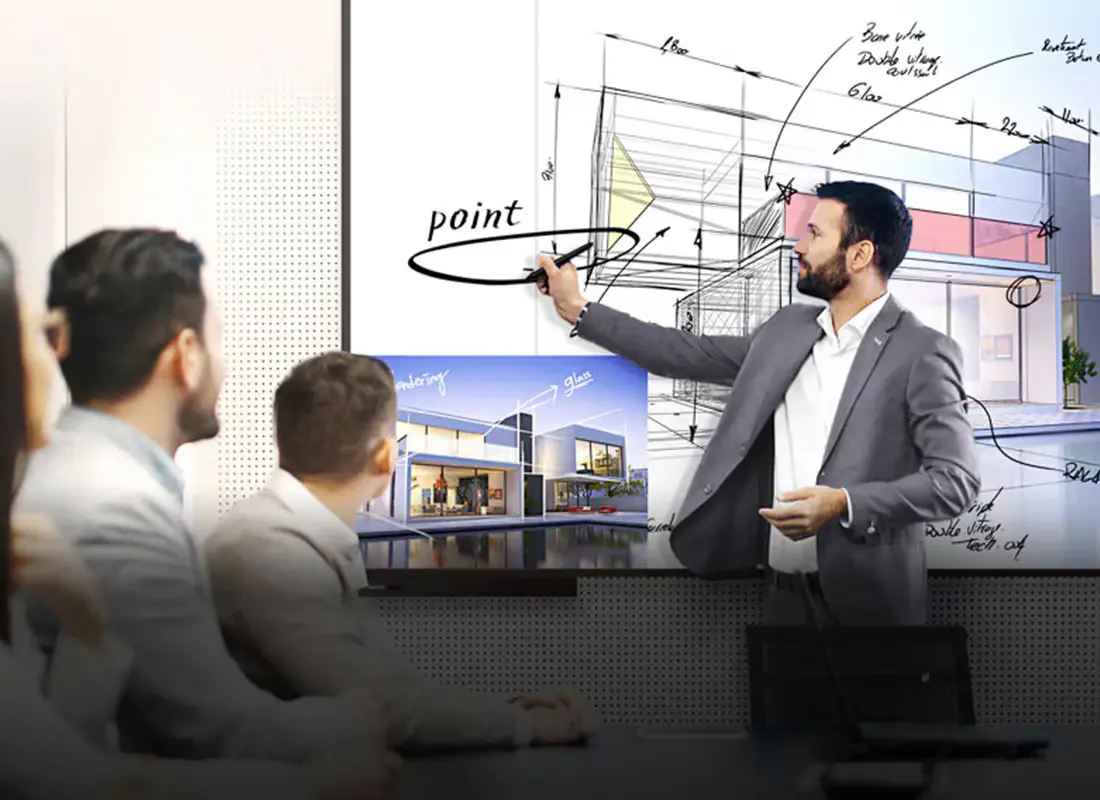
Systems integration and automation create an optimised environment for productive decision-making. Sensors monitor room occupancy and automatically adjust lighting, temperature and audio-visual settings based on the number of participants and meeting requirements. Digital dashboards provide real-time insights into space utilisation, helping organisations optimise their meeting room resources while ensuring the physical environment supports peak cognitive performance.
The integration of high-speed internet connectivity, cloud-based collaboration platforms and advanced security protocols ensures that boardrooms can handle complex data analysis, secure document sharing and seamless communication with stakeholders across different locations. These technologies work together to create an ecosystem where facilities management teams have immediate access to the information, tools and collaborative capabilities they need to make informed choices quickly and effectively.
Transforming Decision-Making Quality and Speed
Smart boardrooms are fundamentally changing executive decision-making by addressing the unique requirements of senior leadership teams. Executive-grade collaboration infrastructure incorporates dual-lens 4K/8K PTZ cameras with speaker-tracking algorithms tuned for boardroom tables, beam-forming ceiling microphone arrays that create “acoustic exclusion zones” around confidential sidebar conversations and on-board AES-256 encrypted media processors that keep all streams within the organisation’s network perimeter. Real-time language support through edge-based ASR provides live captions in English, Hindi and regional languages, increasingly requested by Indian boards with non-resident independent directors.

Integrated decision-support capabilities transform how boards access business intelligence through a single API gateway connecting room controllers to existing data lakes, BI workspaces and ESG reporting stacks. Directors access pre-authorised dashboard slices for each agenda item, with drill-down requests executed on BI backends and rendered locally on low-latency edge nodes, ensuring sensitive data never leaves corporate infrastructure while providing immediate access to decision-critical insights.
Decision velocity increases through context-aware automation that responds to meeting dynamics in real-time. When agendas shift from M&A to risk oversight, room profiles pivot instantly—lighting adjusts to analysis presets, displays load relevant heat-maps and transcription engines apply appropriate lexicons. Directors vote using personalised NFC tokens with results recorded on permissioned blockchain ledgers within seconds, while AI summarizers process meeting artefacts to generate executive digests and tag follow-ups automatically. These capabilities transform executive discussions from passive information consumption into interactive, data-secure decision cycles measured in minutes rather than days.
Real-World Impact on Indian Enterprises
The practical benefits of smart boardrooms are already being realised across various sectors in India through next-generation optimisation capabilities that go far beyond traditional room management systems. AI-driven cost optimisation now employs predictive analytics engines that don’t just track room usage patterns, but actively forecast meeting requirements based on business cycles, seasonal trends and strategic initiative timelines. These systems use machine learning algorithms to automatically suggest optimal room configurations, predict equipment maintenance needs before failures occur and dynamically reallocate resources across multiple facilities in real-time.
Enhanced security and compliance features leverage behavioural biometrics and anomaly detection that continuously monitor meeting participants for unusual activity patterns, while blockchain-based audit trails provide immutable records of all boardroom discussions and decisions for regulatory compliance. Smart boards now integrate homomorphic encryption that allows secure data processing without decrypting sensitive information and federated identity management ensures seamless yet secure access across enterprise networks.
AI-powered smart meeting room solutions with edge computing architecture can go beyond basic room monitoring; their system now automatically adjusts presentation content based on audience composition, provides real-time sentiment analysis of meeting discussions and generates predictive insights about which strategic initiatives are likely to gain board approval based on historical voting patterns and discussion dynamics.
The scalability advantage for large and medium-sized organisations now includes autonomous system orchestration across multiple locations, where meeting rooms can automatically configure themselves based on the type of discussion scheduled, participant profiles and even external factors like market volatility or regulatory announcements that might affect decision-making priorities.
Implementation Trends and Future Outlook
Looking ahead to 2025 and beyond, several exciting trends are shaping the future of smart boardrooms in Indian enterprises. AI-powered building management systems are becoming more sophisticated, incorporating automated visitor check-in processes, facial recognition access controls and predictive maintenance capabilities that ensure meeting rooms are always ready for optimal performance.
A leading systems integrator specialising in enterprise-grade smart boardroom solutions will implement cutting-edge meeting technologies that require a comprehensive approach that balances innovation with practical business requirements. Their integration methodology begins with infrastructure assessment and network architecture optimisation, where the existing IT backbone’s capacity to support high-bandwidth 4K/8K video streams, edge computing nodes and real-time AI processing workloads is evaluated.
Most integrators offering turnkey integration services encompass everything from fibre optic network upgrades with redundant pathways to custom API development that seamlessly connects your boardroom systems with existing ERP, CRM and business intelligence platforms. They deploy hybrid cloud architectures that maintain sensitive data on-premises while leveraging cloud-based AI services for advanced analytics, ensuring compliance with Indian data localisation requirements.
Conclusion
Smart boardrooms represent more than just a technological upgrade—they embody a fundamental shift toward more intelligent, efficient and effective decision-making processes in Indian enterprises. By leveraging AI, sensors and advanced collaboration technologies, these innovative spaces are enabling board members to make better decisions faster, with greater input from diverse stakeholders and more comprehensive access to relevant data.
The measurable benefits, including reduced meeting preparation time, improved decision-making speed, enhanced employee productivity and optimised space utilisation, demonstrate clear returns on investment that justify the initial technology costs. As Indian enterprises continue to compete in increasingly complex global markets, the ability to make swift, well-informed decisions becomes a critical competitive advantage.
Organisations that embrace smart boardroom technology today are positioning themselves for success in tomorrow’s business environment, where agility, collaboration and data-driven decision-making will separate industry leaders from those left behind.
FAQ’s
A smart boardroom is equipped with AI-driven cameras, interactive displays, IoT sensors and data dashboards that transform executive spaces into dynamic decision hubs. These enable real-time collaboration, visual analytics and adaptive environments built for modern leadership teams.
Intelligent systems surface live insights, automate agenda flow, adjust room settings and summarise outcomes—all in real time. Directors receive relevant data when needed and can move from discussion to action faster and with more confidence.
Smart boardrooms link to dashboards, BI systems and enterprise databases so that decision-makers access secure, contextual information during meetings. This connectivity ensures choices are grounded in accurate data rather than relying solely on memory or presentations.
Sensors in the room track occupancy, adjust lighting and set acoustic zones to match the meeting type—M&A, strategy reviews or risk oversight. These subtle changes help participants focus and create an ambience appropriate for high-stakes decisions
Organisations report faster meeting cycles, improved space utilisation, stronger data governance and better stakeholder engagement. The ROI comes from fewer delays, more effective decisions and optimized use of real estate and technology resources.
A boardroom setup is the arrangement of furniture and AV equipment like display screens, microphones, cameras, and conferencing systems for meetings.
It is designed to enable clear communication, presentations, and seamless collaboration in executive or team discussions.
Boardroom style seating is a layout where participants sit around a large central table, typically facing each other.
It is designed for meetings, discussions, and decision-making, allowing direct communication and interaction.