


As one of the early adopters, the UAE’s hospitality, education and residential sectors have embraced integrated AV technology to create smarter, more immersive and seamlessly connected environments.
In a region synonymous with ambition and hospitality, technology is rapidly evolving from being a back-end utility to a front-end differentiator. The UAE’s vision for smart infrastructure and experiential environments has created a strong demand for AV solutions that blend design, performance and simplicity. This transformation is most visible across three key verticals: hospitality, education and residential living.
Let’s explore how each of these sectors is redefining itself through AV integration and why the UAE is uniquely positioned to lead this evolution.
Hospitality: Crafting Experiences Through Technology
The UAE’s hospitality industry has always set global benchmarks for luxury and service excellence. But in recent years, the focus has shifted from grandeur alone to personalised guest experience and that’s where integrated AV solutions in UAE come into play.
In a modern hotel, every touchpoint contributes to a sense of effortless luxury and behind that simplicity lies sophisticated technology. From seamless digital check-ins and automated lighting scenes to immersive entertainment systems in guest rooms, today’s hotels rely on a tightly woven AV ecosystem.
Consider a five-star resort in Dubai: guests might enter a lobby where digital signage dynamically updates to showcase personalised welcomes, brand stories, or live event promotions. In the suites, intuitive room control panels allow visitors to adjust curtains, lighting and temperature, or stream their own content on high-resolution displays. Meanwhile, behind the scenes, networked AV systems connect conference rooms, banquet halls and event spaces, allowing hotel staff to manage sound, visuals and lighting at the touch of a button.
Meeting and event spaces, too, have evolved dramatically. The UAE’s hospitality sector now demands venues that are not just beautiful but technologically agile, capable of hosting hybrid corporate events, weddings or multimedia showcases with equal finesse. A centralised AV control system ensures every space, from the ballroom to the rooftop lounge, can transform instantly based on the event type.
Moreover, sustainability and operational efficiency are shaping decisions as hotels seek systems that reduce energy consumption and simplify maintenance. Cloud-based monitoring and analytics are helping facility managers pre-empt faults, schedule maintenance and even optimise AV usage patterns, marrying luxury with long-term value.
In short, the UAE’s hospitality industry no longer views AV integration as a technical necessity. It’s a signature of brand identity and a key differentiator in a market that thrives on delivering unforgettable experiences.
Education: Building Connected, Collaborative Campuses
While hospitality focuses on guest experience, the education sector’s mission is transformation of a different kind, that of minds and futures. Across universities and schools in the UAE, AV integration has become the foundation of modern pedagogy, powering both in-person and hybrid learning environments.
Classrooms are no longer static. They are dynamic, interactive ecosystems where display systems, wireless presentation tools and advanced audio capture ensure that every student, whether on campus or joining remotely, enjoys an equal, engaging learning experience. In a typical smart classroom setup, touch-enabled displays replace whiteboards, allowing instructors to annotate in real time, record sessions and share notes instantly. Lecture capture systems document every class for on-demand access, extending learning beyond the four walls.
Institutions such as the American University of Sharjah and Khalifa University are embracing advanced AV-over-IP infrastructure to connect multiple lecture halls and auditoriums, enabling live broadcasts, collaborative research sessions and multi-location events. The flexibility and scalability of such systems allow universities to adapt rapidly, whether hosting an international seminar or conducting remote examinations.
At the heart of this transformation is a shift from traditional teaching aids to collaborative technologies, where students become active participants rather than passive recipients. AV-integrated learning spaces promote teamwork, creativity and inclusivity. For educators, centralised control systems simplify lesson delivery, while analytics tools provide insights into room utilisation, participation levels and even content engagement.
Beyond classrooms, UAE institutions are reimagining auditoriums, innovation hubs and e-learning studios. These spaces often feature LED video walls, broadcast-grade cameras and professional-grade acoustics, enabling everything from high-profile keynote lectures to professional-quality educational content creation.
What sets the UAE apart is its proactive embrace of international standards and best practices in educational technology. Government initiatives such as “Smart Learning” and ongoing investment in digital infrastructure have created fertile ground for innovation. Schools and universities are not just consumers of AV technology; they are testbeds for what the future of learning looks like globally.
By investing in integrated AV, the UAE is cultivating a generation comfortable with technology-mediated collaboration, a skill that’s indispensable for the workplaces of tomorrow.
Residential: The Rise of Smart and Immersive Living
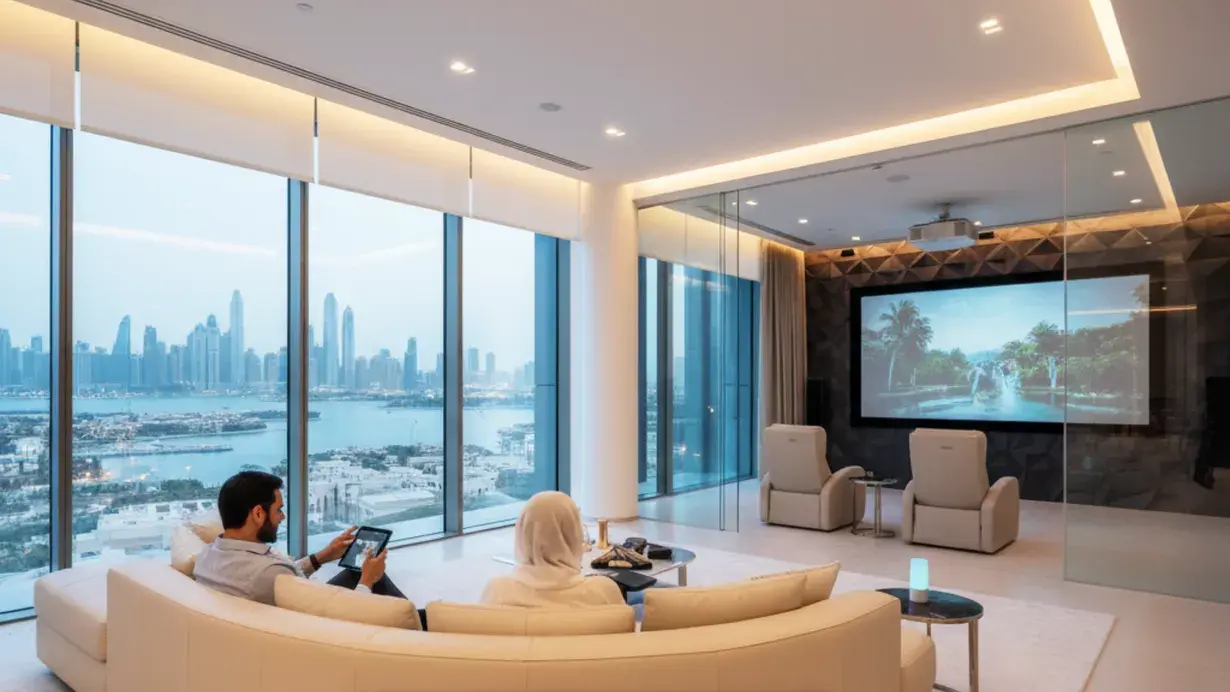
The final piece of this integration puzzle lies closer to home, quite literally. In the UAE, luxury residences and smart communities are setting new benchmarks for digital living. The concept of home has expanded beyond comfort and aesthetics to encompass intelligent experiences, where AV plays a central role.
From villas on Palm Jumeirah to apartments in Downtown Dubai, residents are embracing automation, control and entertainment systems that merge seamlessly with architecture. Homeowners today want living spaces that respond to their moods and routines. This may include lights that adjust to natural circadian rhythms, blinds that sync with sunrise and audio zones that follow them across rooms.
At the heart of this lies the modern home automation ecosystem. Integrated control systems consolidate lighting, climate, security and entertainment into one intuitive interface, often accessible via a tablet or smartphone. Voice-controlled assistants and AI-powered preferences enhance convenience, while sophisticated sensors enable energy optimisation and predictive maintenance.
In terms of entertainment, residential AV design has moved far beyond the traditional home theatre. Dedicated media rooms now feature Dolby Atmos-enabled surround sound, acoustically treated interiors and projection systems that rival cinema-grade performance. Multi-room audio solutions ensure music flows effortlessly through the home, while hidden speakers and motorised lifts preserve aesthetic minimalism.
Yet, what truly distinguishes the UAE’s residential AV landscape is its fusion of luxury and lifestyle. Technology here doesn’t just serve function, it amplifies identity. From custom lighting scenes that reflect a homeowner’s personal aesthetic to networked security systems that provide peace of mind, AV is woven into the fabric of daily living.
Developers, too, are recognising this demand. Many new projects integrate smart infrastructure from the outset, ensuring compatibility with future systems. In high-end communities, centralised management platforms allow residents to monitor utilities, book community facilities, or connect with concierge services, all via a unified digital interface.
For homeowners and property developers alike, investing in AV integration means investing in long-term desirability and resale value. In a competitive market like the UAE, where architectural excellence is the norm, intelligent living is fast becoming the new standard of luxury.
A Connected Vision: Designing for Integration, Not Isolation
Though each of these sectors — hospitality, education and residential — serves different audiences, a unifying principle connects them: the pursuit of seamless, human-centric experiences through integrated AV design.
In practice, this means designing systems that are intuitive for users yet robust in performance. It involves harmonising visual, auditory and control elements so that technology enhances interaction without overwhelming it. Whether in a classroom or a hotel suite, the objective is the same: to make technology feel invisible, yet indispensable.
The UAE’s diverse landscape of end-users and architectural innovation makes it an ideal laboratory for this kind of integration. The confluence of government-led smart city initiatives, world-class construction projects and a discerning clientele has fostered an environment where AV excellence can truly thrive.
To achieve this, collaboration is key. Architects, designers, system integrators and facility managers must work in tandem from the earliest design phases. Proper cabling infrastructure, acoustical considerations and network planning ensure that technology complements, not complicates, the final experience.
Furthermore, as the UAE continues to evolve as a global hub for events, education and tourism, interoperability and scalability are emerging as non-negotiables. AV systems must adapt effortlessly to new formats, new devices and new expectations. The next frontier lies in leveraging AI, analytics and cloud-based management to deliver predictive insights and continuous optimisation, ensuring every system not only performs but learns.
The Future Is Seamless
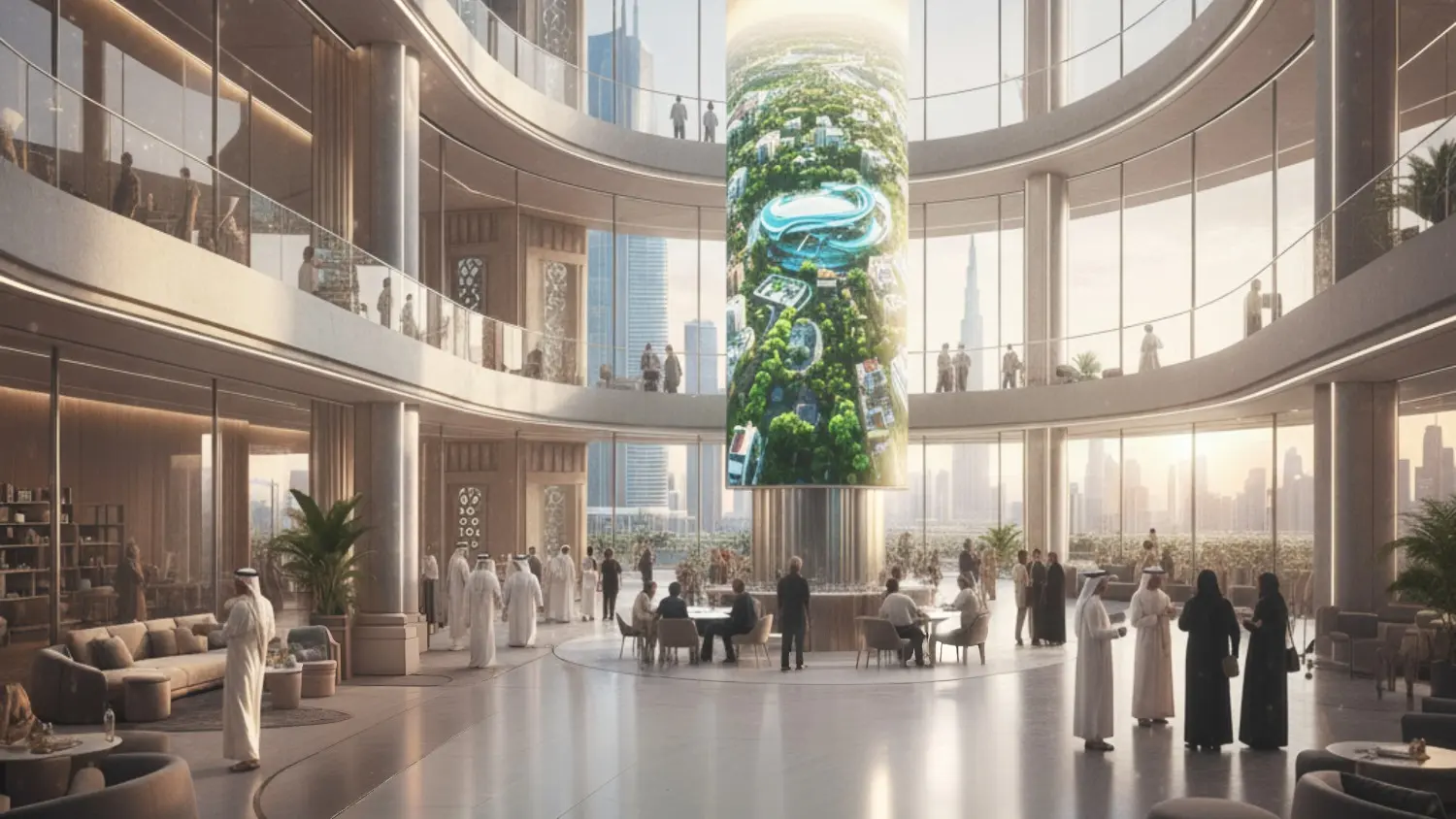
The UAE’s journey with AV integration mirrors its broader vision, one of ambition, connectivity and world-class experiences. Whether hosting global travellers, nurturing the next generation, or redefining modern living, the country continues to set the pace for how technology can enrich human interaction.
As AV systems become more networked, intelligent and design-conscious, the boundaries between sectors will continue to blur. What unites them all is the desire to create environments that feel effortless, where technology fades into the background and only the experience remains.
In the UAE, that future isn’t far away. It’s already taking shape, one integrated system, one inspired space at a time.
FAQ’s
Because today’s spaces demand more than functionality. They need to deliver seamless, interactive experiences. Integrated AV systems help hotels, schools and residences operate smarter, communicate better and create lasting impressions.
In hospitality, AV elevates guest experiences through automation and ambience control. In education, it fosters engagement and inclusivity through collaborative, hybrid-ready learning environments. Each sector uses AV to meet its unique human and operational goals.
They should begin with a clear understanding of user needs, scalability requirements and system interoperability. Partnering with an experienced AV integrator like Actis ensures design foresight, technical precision and long-term value.