


The audio visual world has always evolved alongside computing. What has changed in the last few years is the pace and depth of that evolution. In 2026, AI is no longer a background feature quietly assisting a few software tools. Today, it shapes everything from how AV spaces are planned to how they actually feel when people use them.
In meeting rooms, control systems and digital signage networks, artificial intelligence is reshaping how people interact with technology. It does not just automate actions. Instead of simply running tasks, it watches how people use a space, spots trends, and adjusts the system to fit real working habits. This shift is quietly redefining what the AI in AV industry 2026 conversation really means.
Instead of asking what devices can do, organisations are now asking how systems should behave to become more intuitive and require less user intervention and monitoring.
That change in thinking is what makes this moment so significant.
From devices to environments
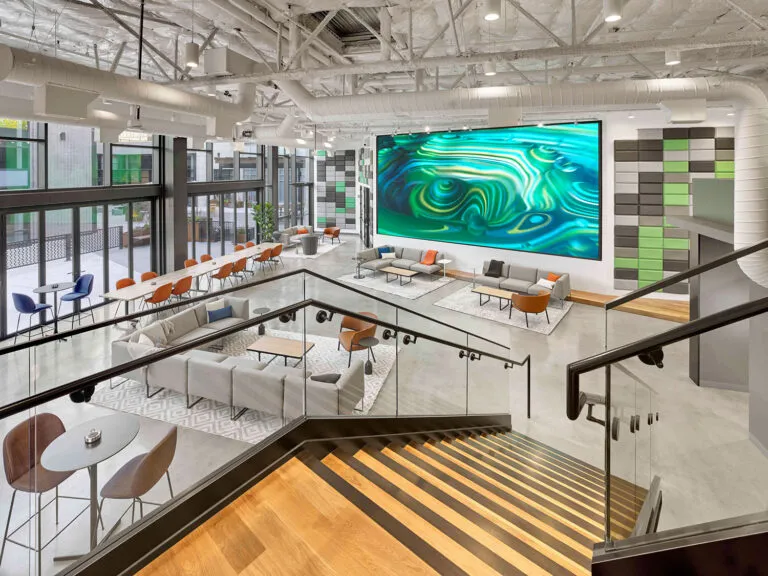
Traditional AV systems were built around hardware. Displays, microphones, speakers, cameras and control panels were selected, installed and connected. Once the room was commissioned, the system behaved the same way every day until someone changed it.
AI technology in audio visual environments has turned that model on its head.
Rooms are no longer static. They respond.
A meeting room can recognise how many people are present, what type of meeting is taking place and how the space is being used. It can adjust microphone sensitivity, camera framing, lighting and even screen layouts without anyone touching a control panel.
People can walk into a space and start working. The technology adapts to them instead of forcing them to adapt to it.
What AI actually does inside modern AV systems
AI processes audio, video and sensor data in real time. It looks for patterns that indicate what is happening in the room. It uses that information to make decisions that improve the experience for the people using the space.
In video conferencing, this means cameras don’t have to just point at a fixed area. They can detect faces, follow speakers and frame groups automatically. Everyone appears properly on screen regardless of where they are sitting.
In audio systems, AI separates speech from background noise. It knows the difference between someone speaking and a chair scraping across the floor. This allows voices to come through cleanly without constant manual adjustment.
In control systems, AI learns how rooms are used. It recognises that a certain space is usually used for presentations in the morning and video calls in the afternoon. It can prepare the room accordingly before anyone arrives.
These capabilities are now becoming standard across high quality AV systems in enterprise environments.
Hybrid meetings become more human

Hybrid work has created a new set of challenges for AV teams. Remote participants often feel like observers rather than contributors. Small technical issues build up into frustration.
AI makes hybrid meetings feel more natural.
Camera framing powered by AI ensures that remote participants can actually see who is speaking. Instead of a single wide shot of a table, the view shifts to whoever has the floor. Facial expressions become visible again. Conversations feel more balanced.
Noise suppression powered by machine learning removes keyboard taps, air conditioning hum and background chatter. People no longer have to repeat themselves because the microphone picked up the wrong sound.
These changes may seem small in isolation. Together, they completely change how effective hybrid meetings feel.
This is one of the clearest examples of how AI technology in audio visual systems is improving real business outcomes.
Smarter spaces, not just smarter devices

In 2026, AV is no longer confined to meeting rooms. It stretches across offices, campuses and public areas.
AI allows these spaces to behave like connected environments rather than a collection of independent devices.
Digital signage systems can change content based on who is nearby, the time of day or what is happening in the building. Visitor displays show different information during peak hours. Wayfinding adapts when rooms are booked or routes change.
Meeting rooms can share usage data with workplace systems. If a room is not being used, the AV system can power down displays and audio to save energy. If a space is booked but no one arrives, it can release the room back into the scheduling system.
This kind of intelligence was difficult to achieve when AV operated in isolation. With AI, AV becomes part of the digital nervous system of the workplace.
This is why many organisations now see AV technology 2026 as a strategic infrastructure layer rather than a support function.
Data driven design and optimisation
Modern AV platforms collect data about how spaces are used. How often rooms are booked. How long meetings last. Which features people actually use. How often video calls fail or succeed.
AI analyses this data to identify patterns that humans would miss.
It might show that certain rooms are underused because the camera angle is poor. It might reveal that users avoid a space because the audio quality drops when more than six people are present. It might highlight that certain layouts lead to better meeting outcomes.
These insights feed back into design decisions. AV teams can improve room layouts, choose better equipment and justify upgrades with real data.
This moves AV from guesswork to evidence based planning.
What this means for AV professionals
AI is not removing the need for AV specialists. It is changing what they do.
Instead of spending time fixing the same issues over and over, technicians can focus on system design, user experience and optimisation. Engineers become more involved in planning how spaces should behave, not just how they are wired.
This shift requires new skills. Understanding data, software and network behaviour is now just as important as understanding signal flow.
The professionals who adapt to this shift will find themselves in higher demand than ever.
The road ahead
The transformation we see in 2026 is only the beginning.
AI will continue to move deeper into every layer of AV. Cameras will become better at understanding context. Audio systems will become more selective and natural. Control systems will become more predictive.
The goal is not to create technology that shows off. The goal is to create spaces that simply work.
When people walk into a room, they should not have to think about microphones, cameras or control panels. They should think about the conversation they are about to have.
That is the future of the AV Industry and AI is the engine driving it.
Why this matters now
Organisations are under pressure to make collaboration easier, not harder. Hybrid work is here to stay. Global teams are the norm. Expectations are higher than ever.
AI gives AV systems the ability to meet those expectations.
It makes technology less visible and more useful. It allows rooms to support people instead of slowing them down. It gives businesses the insight they need to design better spaces and maintain them with confidence.
AI in AV industry 2026 is a fundamental shift in how audio visual environments are built and used.
And it is already reshaping the way we work.
(Banner Image credit – QSC)
FAQ’s
AI makes video meetings feel far more natural and less technical. Features like auto-framing ensure the active speaker is always in view, while intelligent noise reduction removes background distractions such as typing, traffic, or air conditioning. Real-time translation and live captions also help global teams collaborate without language barriers, making meetings more inclusive and productive.
AI-driven content creation uses software to automatically edit video, optimise audio, and even personalise content for different audiences. In advanced AV environments, it can also support immersive experiences using AR and VR, allowing presentations, training sessions, and demonstrations to become far more engaging without needing complex manual production.
AI allows live event systems to adjust in real time. It can balance sound levels, fine-tune lighting, and optimise visuals based on what is happening on stage or in the room. Behind the scenes, predictive maintenance tools monitor equipment and flag issues before they become failures, helping events run smoothly without unexpected technical disruptions.
Yes. AI in AV is no longer limited to large enterprises. Many modern AV platforms now include AI features as standard, making them far more accessible and affordable. This allows smaller businesses to benefit from smarter meetings, better sound and video quality, and more reliable systems without needing large IT teams or high support costs.
AI systems do process audio, video, and usage data, which naturally raises privacy questions. However, modern AV platforms are designed with strong data protection, encryption, and compliance controls. When deployed correctly, AI can improve collaboration while still respecting user privacy and organisational security policies.