


Most businesses only notice audio visual systems when something breaks
That scenario is becoming harder to live with.
Work no longer happens in a single room, at a predictable time, with everyone present. Conversations stretch across offices, homes and time zones. Decisions are shaped on screens as often as they are around tables. The quality of these interactions influences how quickly teams move and how clearly they think.
AV solutions sit quietly inside this shift. Not always visible, but increasingly central and critical to business outcomes.
What AV solutions mean in a business context?
On paper, AV solutions are straightforward to describe. Displays, projectors, microphones, speakers, cameras and the software that connects and controls them.
In real workplaces, they are something else.
They exist to reduce effort. To remove the small pauses and interruptions that slow conversations down. To make distance less noticeable and collaboration feel less deliberate.
A well-designed AV environment rarely draws attention to itself. Voices sound natural without adjustment. Visuals are clear without being discussed. Meetings begin without a technical prelude. When this happens, people stop thinking about the system and start focusing on the discussion.
This is the point where AV stops being equipment and starts behaving like infrastructure that simplifies and enables smooth collaboration.
Where AV shows up most often in business?
Boardrooms tend to set expectations.
These are spaces where clarity matters, where misunderstandings carry cost. Audio that feels slightly delayed or uneven changes how people participate. Visuals that are hard to read pull attention away from the discussion itself. Remote participants, when poorly supported, often become passive observers rather than active contributors.
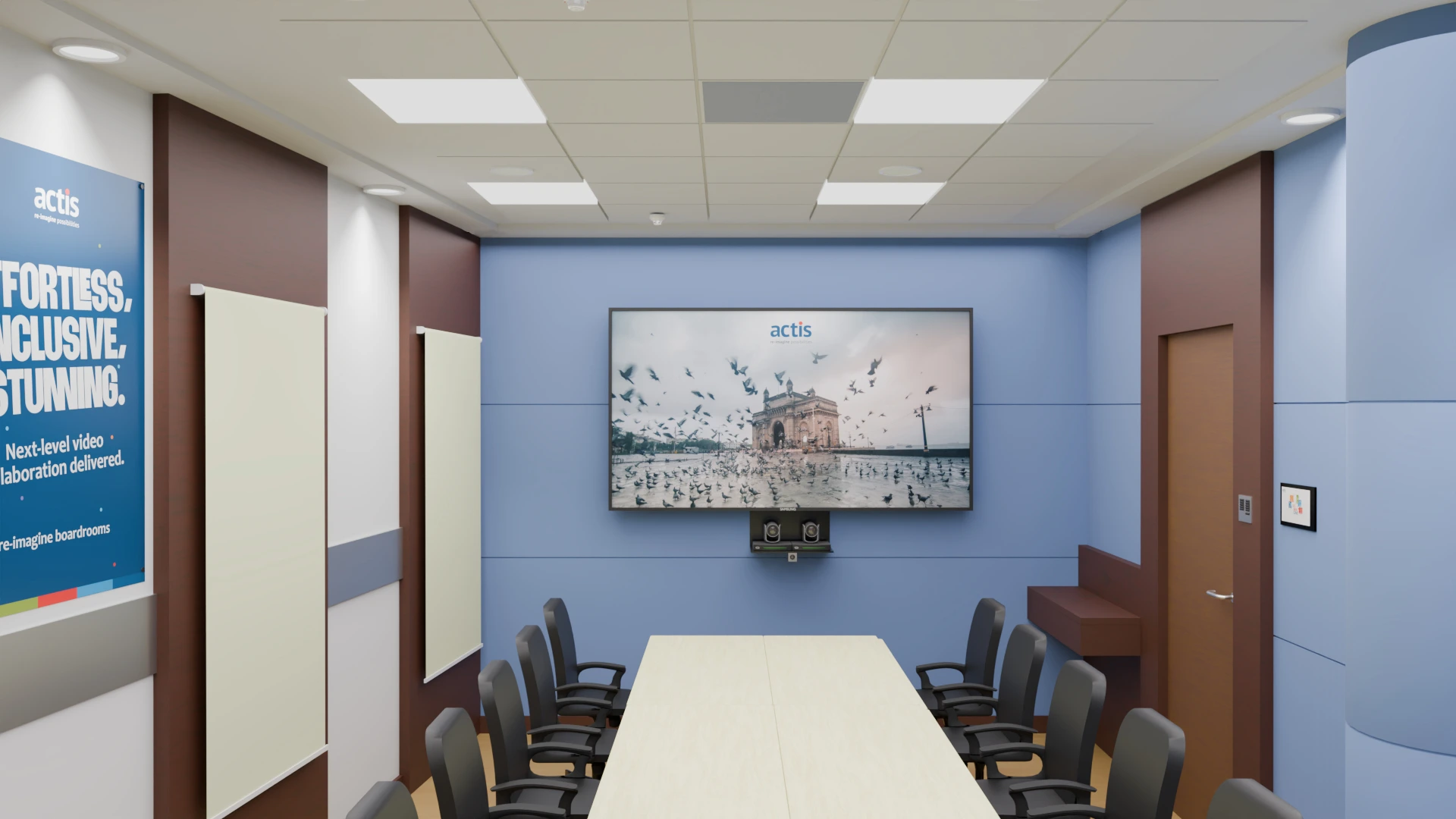
Conference rooms introduce a different tension. They are shared, frequently reconfigured and rarely supported in real time. The best systems here are not the most feature-rich, but the most predictable. If a room requires explanation, it has already failed.
Training spaces bring endurance into the picture. Sessions run longer. Attention needs to be held, not just captured. Audio must remain intelligible across the room. Visual content needs to stay clear without constant adjustment. Hybrid participation should feel intentional rather than improvised.
Larger spaces such as auditoriums and town hall venues amplify everything. When they work, the technology disappears. When they do not, it dominates the room. These environments depend on careful coordination between sound, visuals, acoustics and control. No single element can compensate for another.
Across all of these spaces, one pattern repeats. The most effective AV systems are the ones people forget about.
AV beyond meeting rooms
As organisations evolve, AV begins to appear in less obvious places.
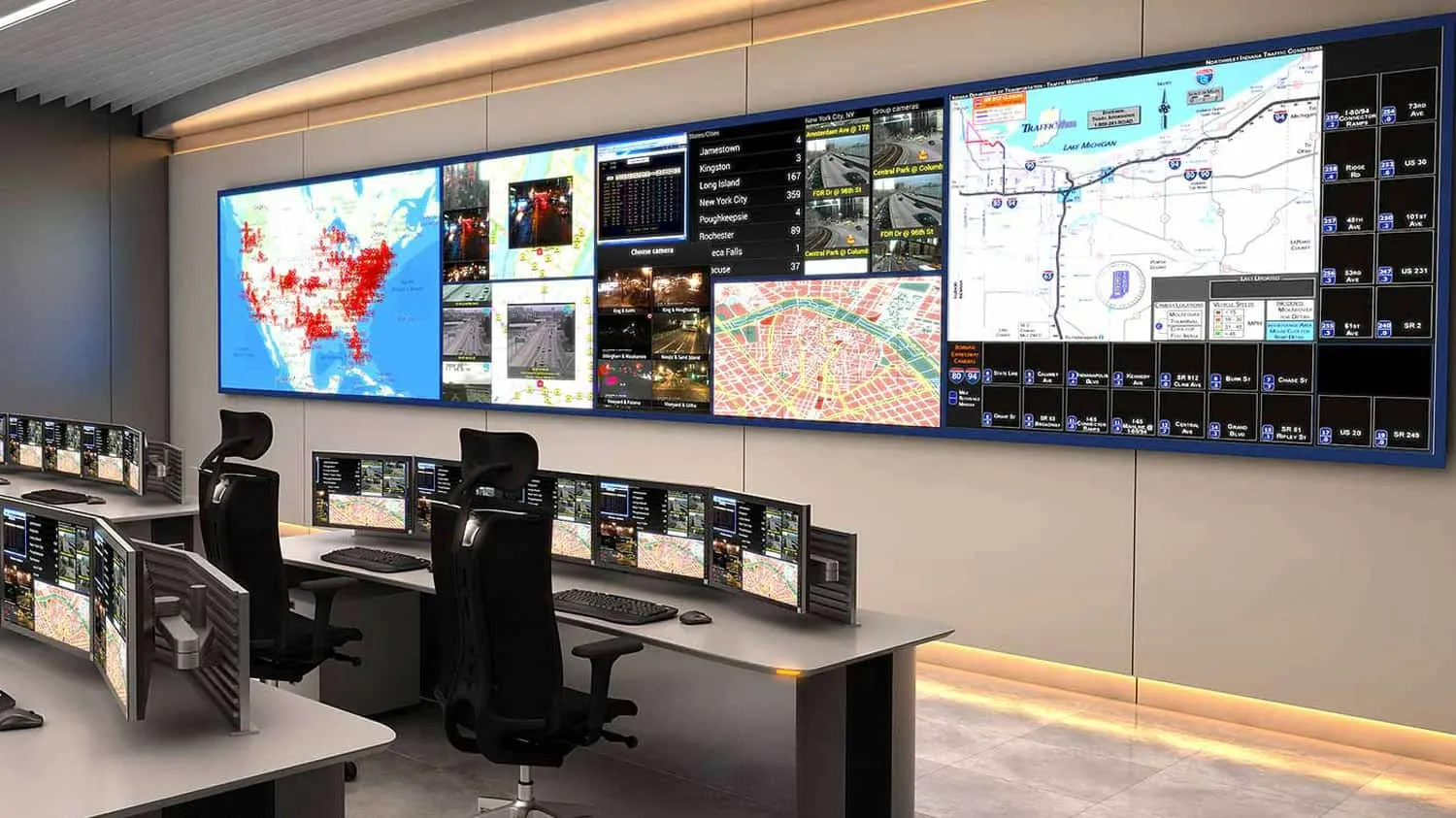
Operations centres are a good example. In network and security environments, information is continuously observed rather than occasionally presented. Large displays and video walls support awareness, comparison and quick judgement. Here, clarity is not about aesthetics. It is about reducing hesitation.
Experience centres serve a different purpose. They exist to help visitors understand ideas that are difficult to explain verbally. Rather than listing features, these spaces rely on carefully staged visuals, sound and interaction. The goal is not to impress, but to make something abstract feel graspable.
In these environments, the line between content and presentation blurs. How something is shown becomes part of what is being understood.
Media briefing rooms and internal communication spaces bring another dimension. These are rooms where tone matters. AV influences pacing, emphasis and how messages land. Inconsistent quality distracts. Consistency builds confidence, often without anyone consciously noticing why.
Digital signage has also changed character. It is no longer about filling unused walls. When integrated properly, it becomes a quiet communication layer, updating information, guiding movement and reinforcing context across a workplace.
More recently, video production and broadcast spaces have moved inside offices. Organisations create more of their own content, for internal and external audiences. These environments value repeatability over spectacle. They need to work the same way every time.
A useful way to think about AV environments
One way organisations make sense of AV planning is by looking at intent rather than equipment.
| Business environment | Primary purpose | What AV needs to prioritise |
|---|---|---|
| Boardrooms | Decision-making | Clear audio, balanced visuals, equal participation |
| Conference rooms | Collaboration | Ease of use, flexibility, consistency |
| Training rooms | Learning |
Visibility, intelligibility, endurance |
| Auditoriums | Scale and reach | Coverage, integration, control |
| Operations centres | Monitoring | Clarity, reliability, real-time visibility |
| Experience centres | Understanding | Engagement, narrative flow, immersion |
This kind of framing helps avoid a common mistake. Treating every space as a variation of the same room.
What organisations often underestimate
When AV projects are discussed, attention tends to drift towards specifications.
Resolution. Brightness. Camera models. Software features.
These details matter, but they rarely determine success on their own.
Standardisation helps here. When rooms behave consistently, support becomes simpler and adoption improves.
Usability is one of the most underestimated factors. Systems that feel different from room to room slow people down. Familiarity creates confidence. Confidence shortens meetings and reduces friction.
Reliability follows close behind. Meetings are time-bound. Failures are remembered long after smooth sessions are forgotten. AV systems need to be designed for everyday use, not ideal demonstrations.
Security has become unavoidable. As AV systems connect to enterprise networks, they inherit the same responsibilities. Cameras, microphones and control platforms must be treated with the same care as any other connected asset.
Maintenance is the quiet final piece. AV systems age gradually. Regular monitoring and upkeep prevent small issues from becoming visible failures.
Future readiness is often discussed in abstract terms. In practice, it comes down to flexibility. Can systems be updated without being replaced? Can components evolve without disrupting everything else? Design choices made early tend to answer these questions later.
Why businesses increasingly rely on AV solutions
The value of AV solutions is rarely dramatic. It’s subtle but it accumulates and helps create smoother flow within the organisation.
Clear communication reduces fatigue and improves outcomes. Reliable systems reduce hesitation and encourage adoption. Consistent experiences allow people to focus on outcomes rather than processes.
As organisations grow, these effects compound. What works in a small meeting room often becomes the foundation for larger, more complex environments. A majority of meeting time lost to technical issues comes from setup friction rather than equipment failure. That friction adds up when your AV infrastructure is not up to the mark.
Modern businesses are shaped less by their physical offices and more by how effectively their people connect. AV solutions influence those connections in ways that are subtle, but persistent and create smoother interactions and workflows across tasks, teams, distances and departments.
And when they are designed well, they do exactly what infrastructure should do.
They fade into the background.
Interested in upgrading your AV solutions or have questions about your existing ecosystem? Our AV specialists can help you choose the right match for your needs and preferences.
FAQ’s
That depends less on your size and more on how your teams actually work. A small office running frequent client calls needs reliable audio and simple video conferencing. Larger organisations often require consistent setups across multiple rooms, support for hybrid meetings and spaces designed for training or leadership communication. The right starting point is understanding where conversations break down today, not counting devices.
Yes, when they are designed for hybrid use rather than added later. Good AV ensures remote participants can hear clearly, see content without compromise and take part in discussions naturally. This reduces the gap between those in the room and those joining remotely, which is where most frustration in hybrid work comes from.
They should be. Effective AV is tailored to room size, acoustics, usage patterns and the level of technical confidence of the people using it. Customisation is less about complexity and more about fit, making systems feel intuitive rather than impressive.
Modern AV systems are built to integrate with common collaboration platforms, scheduling tools and network infrastructure. When integrated well, rooms behave as part of the wider digital workplace, not as isolated systems. This reduces manual setup, improves reliability and keeps workflows consistent.
AV solutions (Audio-Visual solutions) are integrated systems that combine sound, video, displays, and control technologies to improve communication, collaboration, and user experience in spaces like offices, homes, and public venues.
They include design, installation, and management of tools like screens, speakers, video conferencing, and automation systems to create smarter, more efficient environments.